Visitors 581
Unemployed Angels and Sunday Service
January 11, 2026 – When spiritual podcasts meet teenage skepticism
Sunday morning arrives with an unwelcome ding from the doorbell. The sound cuts through the peaceful silence of a house where everyone had planned to sleep late—the particular luxury of a weekend morning with no obligations, no schedules, just rest.
Johnathan groans, checks the clock—barely past eight—and stumbles out of bed. He's sleepy-eyed and wobbly, moving through the house like a man underwater, his brain not quite online yet. Coffee hasn't happened. Consciousness is barely a suggestion.
Johnathan's secret thought: Who rings doorbells at eight in the morning on a Sunday? This better be an emergency or Publisher's Clearing House with an enormous check. Otherwise I'm implementing a household rule about acceptable doorbell hours.
He opens the door to find Linda standing there, dressed in her Sunday best—a floral dress, cardigan, modest heels. She's clearly been awake for hours, already showered and caffeinated, radiating the particular energy of morning people who can't fathom why everyone else isn't equally enthusiastic about dawn.
Good morning! We usually have church on Friday, but today we have a special service. We're watching a podcast by Lorna Byrne and having a discussion after. I thought the girls might want to go—especially Angel, given her angel encounters.
Johnathan blinks at her, processing this information at quarter-speed. Church. Podcast. Lorna Byrne. Girls. His brain struggles to assemble these words into coherent meaning.
Uhh. I doubt it, but I'll ask. Everyone was up late. I'm not even sure they're alive yet.
He shuffles toward the stairs, calling up with the minimal volume necessary to be heard without actually shouting. No response. He tries again, louder. Still nothing. Finally, he climbs the stairs and knocks on doors.
Liora emerges from the bedroom looking like a zombie—hair everywhere, eyes barely open, wearing Johnathan's oversized t-shirt as a nightgown. She was up most of Saturday night working on graphics for the hotel proposal, fueled by coffee and creative obsession. Sleep came around four a.m. Four hours is not enough.
What? Who died? Is the house on fire?
Linda's here. Church. Wants to know if the girls want to go. There's a special service about angels.
Tell her I'm dead. Tell her I died doing graphic design and my ghost says no thank you.
She retreats back into the bedroom and face-plants onto the bed. Johnathan moves to Jennifer's—well, technically Angel's room, but Jennifer's there more than she's at her own house.
He knocks. Jennifer's voice emerges, muffled by pillows and blankets.
Go away. It's Sunday. Sunday is for sleeping.
Linda's asking if you girls want to go to church. Special service about angels.
There's movement from Jennifer's twin bed—sounds of determined rejection. But from Angel's bed, there's different movement. Angel sits up, suddenly alert, her expression interested.
Angel's secret thought: Angels. More theology about angels. After Dad's talk yesterday about angel assignments and future missions, I need more information. Need to understand what's happening to me, what these peripheral visions mean, what I'm supposed to do with all this. Jennifer can sleep—I'm going.
I'll go. Jennifer can stay and worship the god of comfortable mattresses. I actually want to hear this.
Jennifer groans dramatically, pulling a pillow over her head. Angel hops out of bed with surprising energy for someone who was also up late—though she was watching "Touched by an Angel" reruns rather than working, so the sleep deprivation is less severe.
She quickly combs her hair and brushes her teeth, then surveys her limited wardrobe. The pink dress she wore to court—the only clothing she has remotely suitable for church. It's become her default formal wear, the uniform of important occasions. She pulls it on, grabs her winter coat, and heads downstairs.
Linda waits in the living room, delighted that at least one person is taking her up on the invitation. Angel quickly toasts a toaster strudel—the breakfast of teenage girls in a hurry—and heads out the door with Linda.
They're halfway to the car when Angel suddenly stops.
Wait! My coat! It's freezing!
She dashes back inside, grabs her winter coat from the hook by the door, and returns. Linda laughs—the warm, maternal laugh of someone who's watched countless children rush out unprepared for January weather.
They arrive at the same restaurant as before—the Church of Angel Love's regular meeting space. Angel recognizes some faces from Friday's service. The same folding chairs are arranged in a casual circle. But today there's something new: a big-screen TV being wheeled in and plugged into Linda's laptop.
Angel's secret thought: Linda runs this church? I thought she was just a member. But she's the one with the laptop, the one positioning the podium, the one clearly in charge. Interesting. The quiet neighbor lady is actually a spiritual leader. People contain multitudes.
Linda positions the podium near the TV with practiced efficiency. She surveys the small gathering—maybe fifteen people, those brave or devoted enough to show up on a cold Sunday morning when most sensible humans are still in bed.
Welcome, everyone, those of you brave enough to get out of bed early on a cold Sunday morning. I was recently introduced to the writings of Lorna Byrne and thought it would be good to include her work as part of our studies at the Church of Angel Love.
Lorna Byrne is an Irish author and speaker best known for her memoir, "Angels in My Hair." A central theme in her books and podcast appearances is the idea that because humans have free will, angels cannot intervene in our lives unless we specifically ask them to. She frequently uses the phrase that angels are "unemployed" or "bored" simply because people do not ask for their assistance enough.
Angel leans forward, genuinely interested. This is a different angle than Dr. Johnson's philosophical approach—more practical, more direct.
Lorna Byrne claims to have seen and conversed with angels physically since she was a baby. She asserts that everyone has a guardian angel regardless of religion or belief. Her specific teaching regarding "bored" or "unemployed" angels is based on a theological concept that spiritual entities require human consent—invocation—to act within the physical realm.
Lorna claims to be Catholic, but her view of angels isn't exactly orthodox Catholic theology. Of course, neurologists and psychologists think she probably has neurological conditions—such as temporal lobe epilepsy—and argue that her claims are either delusions or fabricated for the purpose of selling books.
Angel's secret thought: Ha! Same thing Dr. Richardson said about my peripheral visions—neurological explanation, probable hallucination. At least this church is honest about the skeptical perspective instead of pretending it doesn't exist. I appreciate that level of intellectual honesty.
I'm not here to say what she believes is true or false, but it's such a compelling idea and conforms so well to what we all believe in the Church of Angel Love. So enjoy the podcast, and we'll discuss it afterward. There's a breakfast buffet at the back of the room, so help yourself. You can eat while you watch.
Linda takes a seat and starts the video. A young man dims the lights for effect—creating a movie-theater atmosphere in this makeshift sanctuary. Angel quickly grabs a plate and fills it with eggs and bacon and several other items she doesn't recognize but thinks might be good.
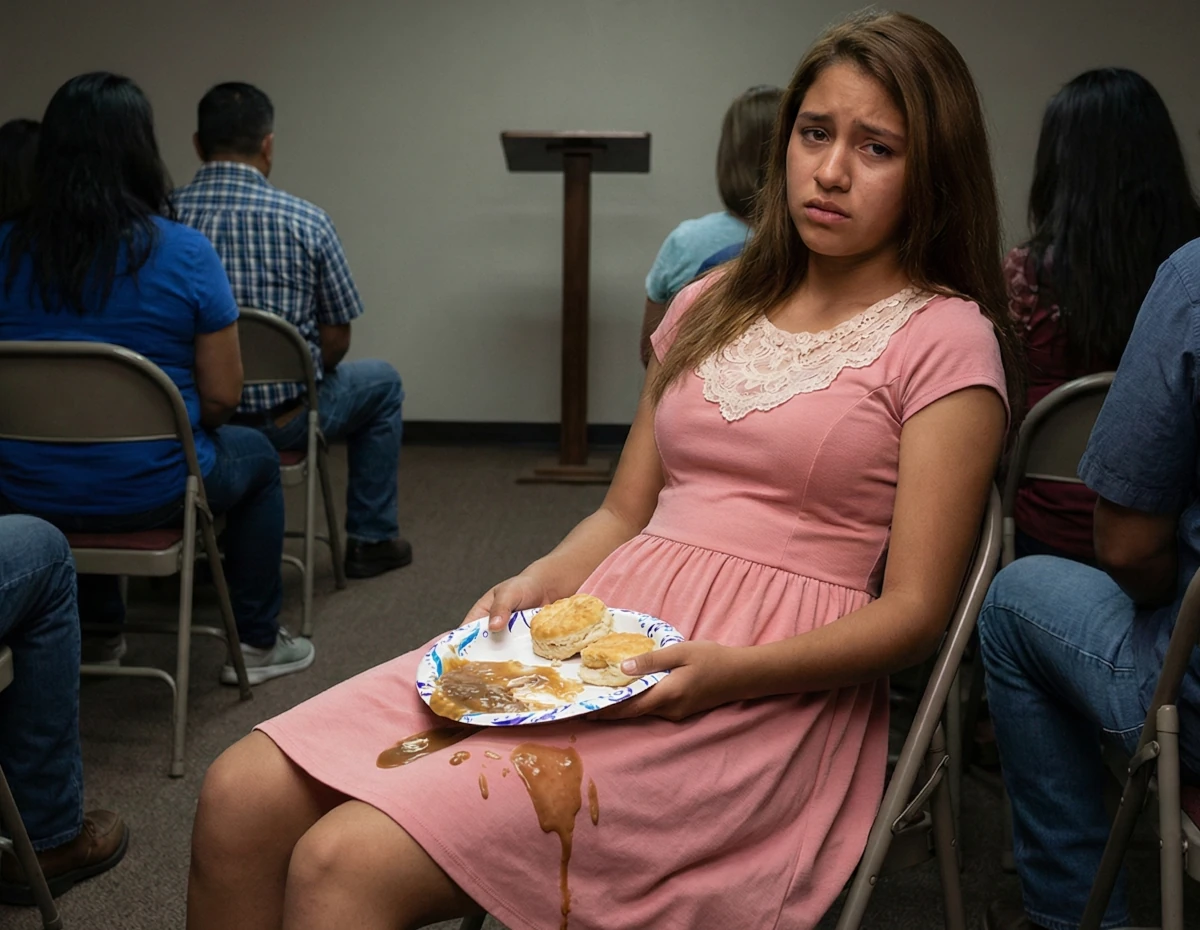
The biscuits and gravy turn out to be her favorite. She's enthusiastically eating when she realizes she's spilled some gravy on her pink dress. She dabs at it with a napkin—oh well, it'll all come out in the wash. This is why people don't wear formal clothes to breakfast buffets.
The podcast plays on the big screen. Lorna Byrne speaks with a soft Irish accent, describing her lifelong experiences seeing angels. She talks about their appearance—luminous beings, sometimes with wings, sometimes in human form. She describes their frustration at being unable to help because humans don't ask for assistance.
Angel watches with great attention, her expression cycling through interest, skepticism, emotion. She tears up during certain sections—particularly when Lorna describes being sent back from near-death experiences, being told there's more work to do on Earth when all she wanted was to stay in the peaceful presence of angels.
Angel's secret thought: That resonates. That feeling of wanting to escape, of finding a place of peace and being told you have to go back to the difficult world. I've felt that. Every time I see the angels in my peripheral vision, there's this longing to fully enter that reality, to leave behind all the trauma and pain. But I can't. I have work to do here. I have Jennifer to help. I have a family who needs me. The angels won't let me check out early.
Other sections make Angel look bored—the repetitive descriptions of angelic hierarchies, the detailed accounts of religious visions that feel disconnected from her lived experience. Her attention wanders during these parts, her mind clearly elsewhere.
When the podcast ends and discussion begins, people start telling stories of their angel encounters. Some claim to see them clearly, with detailed descriptions of appearance and messages. Others say they only sense angelic presence—a feeling of warmth, protection, guidance that can't be attributed to anything physical.
Angel notices people looking at her expectantly. The stories have been told, the experiences shared, and now they want to know what this girl—the one Linda has clearly talked about, the one named Angel who's actually encountering angels—thinks about all this.
Angel raises her hand to speak. The room quiets immediately, all attention focused on her.
I sort of enjoyed some of the video, but a lot of it I didn't like. These angels, these beings of Love, wouldn't leave that poor girl alone, sending her back over and over again to do work for them when they could see how difficult her life was, how much she wanted to just stay on the other side, just rest from a horribly difficult life. I didn't like that part.
She pauses, gathering her thoughts, making sure she's expressing what she really means rather than what she thinks they want to hear.
I laughed when she told the angel to go away, that she was busy, to leave her alone. I'm going to tell my angels the same thing if they start to bother me. I like it that I can only see bits of light in the corner of my eye. I like where my life is headed right now and I don't want anything to interrupt that.
I have all the Love in my life that I can handle right now and I just want to relax and enjoy that. I'm not going to write any books. I'm not going to make YouTube videos about angels. I'm not going to save any souls. Is that bad? Is that wrong?
Angel's secret thought: Please don't tell me I'm obligated to become some kind of spiritual celebrity. Please don't say that seeing angels means I have to evangelize or write memoirs or become a public figure. I just want to be a normal kid with a normal family and a normal life. The angels can work through me quietly, privately, without spectacle.
Linda's expression is pure warmth—the look of someone who's just heard exactly what needed to be said.
No, honey, that's not wrong. It's exactly right. You're spot on. When you're older you might see things differently, but for now, you're perfect. Enjoy the Love that you have right now.
The little congregation gives Angel applause—genuine, warm, accepting. They're not disappointed that she's not claiming dramatic visions or planning spiritual careers. They're celebrating her exactly as she is: a teenage girl who's survived trauma and is trying to build a normal life.
When Angel gets home, Jennifer is helping Johnathan clean the kitchen. The morning cooking session—which Angel apparently missed—has left evidence everywhere. Grease spatters on the stove, flour dusting the counter, dishes stacked precariously in the sink.
Angel! Johnathan wants us to know that cooking breakfast includes cleaning up after too. There's grease spatter everywhere. I've been scrubbing for twenty minutes.
Good to know. I'll make a note of that: cook breakfast, clean kitchen, avoid grease-spatter consequences.
Jennifer suddenly drops the dish towel and rushes to Angel, grabbing her arms with dramatic intensity.
I was so scared when I woke up and you were gone! I thought maybe you left, or something happened, or—I don't know. I just panicked.
Johnathan watches this exchange with mild concern. Jennifer has been pacing back and forth since she woke up and discovered Angel missing, checking her phone compulsively, asking every five minutes when Angel would be back. The anxiety is disproportionate to the situation.
Yeah, she's been pacing back and forth waiting for you to get home. I told her you just went to church with Linda, but she couldn't seem to relax.
Angel looks at Jennifer with compassion—but also with the particular exhaustion of someone who's being asked to be responsible for another person's emotional regulation.
Jennifer, I love you, so much, but I'm not your wife. I can't be with you all the time. Let's practice spending some time apart. It's healthy. It's normal. It's what people do.
She puts up her hands as if addressing the universe directly—a theatrical gesture that makes Johnathan hide a smile.
All you unemployed angels out there, give this girl something to do! She needs a project to keep her busy. Something constructive. Something that doesn't involve monitoring my location twenty-four seven.
Angel's secret thought: This is the angel assignment Dad talked about. Jennifer. She's codependent, anxious, clinging to me like I'm her entire world. That's not healthy for either of us. I need to help her develop independence, find her own identity beyond "Angel's best friend." This is going to be harder than I thought.
Angel goes up to her room and starts doing more homework—or at least makes a show of focusing on schoolwork. Jennifer stares at Johnathan with a look on her face that clearly asks: "What just happened? What did I do wrong?"
Johnathan gives her a sympathetic smile but no verbal answer. Some lessons have to be learned through experience, not explanation. Jennifer needs to figure out healthy boundaries on her own.
Jennifer goes to Angel's room, carefully keeping her distance, and sits in the corner with her earbuds in, listening to music. She's afraid to bother Angel while she's studying, afraid to be clingy after being called out for it, afraid to do the wrong thing and damage their friendship.
Jennifer's secret thought: I'm too much. I'm always too much. Too intense, too needy, too clingy. Angel is going to get tired of me and I'll lose the best friend I've ever had. I need to be cooler, more independent, less desperate. But I don't know how to be those things when just existing without her nearby makes me anxious.
Around noon, Liora comes in from Mildred's house radiating excitement—the particular energy of someone who's just received spectacularly good news. She finds Johnathan in the living room and practically bounces with enthusiasm.
We got the building inspection report! The outside is all weather-worn and the insides are full of trash, but the foundation is fine, the walls are sturdy, the roof doesn't leak, and the structure is sound. So it's a go!
We have the county's and the city's permission to renovate. All the rooms are going to be stripped to the bare walls. All the plumbing and bathroom fixtures and the kitchen are being replaced with new stuff. All the electrical is being replaced with modern components that are up to code. It's going to be an amazing transformation. I feel like we're resurrecting this old hotel from the dead!
Johnathan gives Liora a hug—genuine, warm, sharing her excitement without reservation.
I'm so happy for you, sweetheart. I'm excited to see you so excited. This is going to be a wonderful experience for you. Watching you pursue your creative vision is one of my favorite things.
Liora leans into him, suddenly tired after the adrenaline rush of good news.
Thank you. Your support means everything to me. I'm exhausted. I'm going to take a nap. You could join me... if you want.
Johnathan's secret thought: Was that an invitation for some afternoon delight? I genuinely can't tell. The ambiguity is intentional—plausible deniability if I'm reading it wrong, but clear interest if I'm reading it right. Marriage is a constant process of interpreting subtle signals. I suppose I could use a nap regardless of what other activities might or might not happen.
Sunday afternoon turns into a classic lazy afternoon. The kind where nothing dramatic happens, where the house exists in comfortable low-energy mode. Johnathan and Liora enjoy each other's company without endlessly talking about work—physical intimacy and comfortable silence in equal measure.
Jennifer gradually learns to give Angel some space without being all clingy, but she doesn't like it. The separation feels wrong, unnatural, anxiety-producing. But she's trying. She sits quietly in Angel's room, doing her own homework, present but not intrusive.
Angel explains to Jennifer all about unemployed angels and how they should ask for help even with boring mundane stuff. It doesn't have to be all dramatic. Angels love to help with the little things too—finding lost keys, making good decisions about homework, navigating friendship dynamics.
Lorna Byrne says angels are literally unemployed, just hanging around waiting for humans to give them assignments. So why not ask them to help you find a hobby? Or to help you understand why you get so anxious when I'm not around? Give them some work to do.
You're making fun of this, aren't you? You don't really believe it.
I'm not making fun of it. I'm just... applying it practically instead of mystically. If angels exist and want to help, great—let them help with real problems. If they don't exist and it's just a psychological trick to access my own intuition and problem-solving skills, also great—still helpful. Either way, the outcome is the same.
Jennifer's secret thought: She's so pragmatic about everything. So skeptical. I wish she would just embrace the mystery, accept the divine intervention without analyzing it to death. But that's not who she is. Her skepticism is a survival skill. I need to respect that instead of trying to convert her to my way of believing.
As evening falls on the Taylor household, there is quiet peace. The kind of peace that feels fragile but real—the calm before Monday inevitably arrives with all the drama that comes with it.
Jennifer watches a few more episodes of "Touched by an Angel" until her eyes begin to flutter as sleep takes her to dreamland. She's curled up in her twin bed, comfortable in her own space, slowly learning that physical separation from Angel doesn't mean abandonment.
Angel watches another podcast about angels until sleep takes her to dreamland too—this one featuring a different mystic with different theories. She's collecting information, building a framework for understanding her experiences that accommodates both spiritual mystery and scientific skepticism.
A dozen unemployed angels, summoned by Angel's theatrical invocation earlier, hover outside the house—invisible, peripheral, watching. They're waiting to see where they can be of service, how they can guide circumstances without violating free will, what small interventions might amplify Love in this household.
They're particularly focused on Jennifer. Her codependency, her anxiety, her desperate clinging to Angel as her entire source of identity and stability—these are problems that need addressing. The angels begin their quiet work, arranging small circumstances that will help Jennifer discover independence.
But they're also watching Angel. Her capacity to Love is enormous, but so is her skepticism, her resistance to being used as a spiritual instrument. The angels need her cooperation, but they can't force it. Free will is sacred. They can only guide, suggest, arrange—never compel.
Angel's sleeping thought, manifesting as a dream: I'm standing in a field of light, surrounded by luminous beings. They're asking me to trust them, to accept assignments I don't understand yet. I'm arguing with them—demanding explanations, insisting on agency, refusing to be manipulated even by divine entities. They're laughing. Not mockingly, but with genuine affection. They say my resistance is exactly why they chose me. Blind obedience doesn't create Love. Conscious choice does. They need someone who'll question, who'll push back, who'll demand that spiritual work makes practical sense. They need someone who won't just accept mystical platitudes but will insist on seeing real results.
Johnathan and Liora sleep tangled together—the physical intimacy of people who've chosen each other, who've built something real despite the chaos surrounding them. They dream of contracts and hotels and financial stability, but underneath those practical concerns is deeper contentment: they've created family from broken pieces, they've chosen Love despite uncertainty.
Mia sleeps with her stuffed animals arranged protectively around her, dreaming five-year-old dreams of cookies and playgrounds and the simple joys of childhood. She's oblivious to the spiritual drama unfolding around her, protected by innocence and the fierce love of her family.
Monday looms in the distance. School resumes, work projects demand attention, the comfortable weekend peace gives way to structured weekday chaos. But for now, there is rest.
The unemployed angels keep watch. They're patient—time means nothing to beings who exist partially outside it. They'll wait for the right moments to intervene, the precise circumstances where a small nudge will create maximum Love, where divine guidance will be received as helpful coincidence rather than coercive manipulation.
January 11, 2026, releases its grip. Another day survived, another step forward in the ongoing work of healing and building and becoming. The Taylor household rests, not knowing what Monday will bring but trusting—with varying degrees of conviction—that the angels are working quietly behind the scenes.
Forever and for real. The promise that sustains them through theological debates and codependent friendships and the slow work of learning to trust divine guidance without surrendering critical thinking.
Forever and for real.
Unemployed Angels and Sunday Service: When Protection Means Respecting Individual Spiritual Journeys Rather Than Imposing Destiny Narratives
Reviewed by Hope – Pragmatic Protector Who Knows That Real Spiritual Freedom Means Choosing Your Own Path Without Pressure to Become Public Figure
Episode 20 of Gary Brandt's free online novella "Over the Fence" demonstrates something most spiritual communities miss: protecting someone's relationship with the divine requires respecting their desire for private rather than public spiritual expression. As someone who believes sustainable faith develops through personal choice rather than obligation to evangelize or become spiritual celebrity, this chapter felt like watching healthy boundaries protect healing journey from evangelical pressure. Read the complete series free at thedimensionofmind.com.
📖 Story Arc Summary
On Sunday morning, January 11, 2026—with everyone planning to sleep late—Linda's 8 AM doorbell awakens Johnathan who stumbles to find invitation to Church of Angel Love special service featuring Lorna Byrne podcast about unemployed angels requiring human permission to intervene. Liora declines (zombie from all-night graphics work), Jennifer worships "god of comfortable mattresses," but Angel enthusiastically attends alone seeking understanding of her peripheral vision encounters.
Linda reveals herself as church leader presenting Byrne's theology while acknowledging neurological skepticism (temporal lobe epilepsy explanations). Podcast describes angels as "unemployed" awaiting human invocation due to free will, Byrne's lifelong angel encounters, her frustration being sent back from near-death experiences when wanting to stay in peaceful spiritual realm.
Angel emotionally responds to being-sent-back concept, gets bored during hierarchical descriptions, finally speaks rejecting spiritual celebrity expectations: "I'm not going to write any books. I'm not going to make YouTube videos about angels. I'm not going to save any souls." She affirms desire for normal life without interruption, wanting only to "relax and enjoy" current Love abundance. Congregation warmly applauds her boundary-setting.
Returning home, Jennifer exhibits codependent anxiety over Angel's absence (pacing, phone-checking, disproportionate panic). Angel establishes healthy boundaries explaining "I love you but I'm not your wife. I can't be with you all the time" while theatrically invoking unemployed angels to give Jennifer projects for independence. Jennifer struggles with separation anxiety learning gradually to provide space.
Liora celebrates hotel renovation building inspection approval (sound structure enabling transformation), shares afternoon intimacy with Johnathan. Angel teaches Jennifer practical angel invocation for mundane problems (finding keys, homework decisions, friendship navigation) explaining pragmatic mysticism: whether angels exist or it's psychological trick accessing intuition, outcome remains helpful either way. Episode ends with Sunday peace—Jennifer learning independence, Angel maintaining spiritual pragmatism, unemployed angels focusing on Jennifer's codependency requiring intervention, and recognition that divine purpose operates through conscious choice rather than blind obedience.
💬 Favorite Lines
Brandt captures how protection requires respecting individual spiritual boundaries against celebrity pressure:
"I laughed when she told the angel to go away, that she was busy, to leave her alone. I'm going to tell my angels the same thing if they start to bother me. I like it that I can only see bits of light in the corner of my eye. I like where my life is headed right now and I don't want anything to interrupt that."
"I have all the Love in my life that I can handle right now and I just want to relax and enjoy that. I'm not going to write any books. I'm not going to make YouTube videos about angels. I'm not going to save any souls. Is that bad? Is that wrong?"
"Jennifer, I love you, so much, but I'm not your wife. I can't be with you all the time. Let's practice spending some time apart. It's healthy. It's normal. It's what people do."
"If angels exist and want to help, great—let them help with real problems. If they don't exist and it's just a psychological trick to access my own intuition and problem-solving skills, also great—still helpful. Either way, the outcome is the same."
"Blind obedience doesn't create Love. Conscious choice does... They need someone who'll question, who'll push back, who'll demand that spiritual work makes practical sense."
These lines show that effective spiritual protection requires defending people's right to private relationship with divine rather than pressuring public performance of spiritual celebrity.
🔄 Comment on Unsuspected Plot Twists
The twist isn't dramatic angel encounter but Angel's public rejection of spiritual obligation. Most narratives would show someone discovering they can see angels embracing this as special calling requiring evangelical mission. Brandt shows Angel attending church service specifically to understand her experiences, engaging thoughtfully with Lorna Byrne's unemployed angel theology, then firmly declining to transform personal mystical encounters into public spiritual career.
"I'm not going to write any books. I'm not going to make YouTube videos about angels. I'm not going to save any souls" represents healthy boundary protecting healing journey from evangelical pressure treating her divine connection as resource requiring public deployment. Linda's warm affirmation—"No, honey, that's not wrong. It's exactly right"—validates that authentic spirituality respects individual choice about public versus private expression.
The congregation applauding rather than pressuring demonstrates mature spiritual community celebrating personal boundaries rather than demanding conformity to expectations. They don't need Angel to become spiritual celebrity to validate their theology; they celebrate her choosing healing over performance.
Jennifer's codependent anxiety crisis reveals friendship dynamics requiring intervention. Her disproportionate panic when Angel attends church without her—pacing, phone-checking, desperate relief when she returns—shows clinging behavior suffocating relationship through excessive emotional dependence. Angel's boundary-setting response—"I love you but I'm not your wife"—establishes healthy separation while maintaining affection.
Her theatrical angel invocation—"All you unemployed angels out there, give this girl something to do!"—transforms spiritual concept into practical intervention request addressing Jennifer's need for independent identity beyond "Angel's best friend." That's Angel already doing her angel assignment: helping Jennifer develop emotional self-sufficiency.
Linda's revelation as church leader rather than simple member adds depth without drama. The quiet neighbor organizing services, presenting theological podcasts with intellectual honesty about neurological skepticism, leading discussions with warm facilitation—shows how spiritual leadership operates through service rather than authority.
Angel's practical mysticism approach subverts expected conversion narrative. Instead of choosing between "angels are real" versus "hallucinations are neurological," she adopts pragmatic framework: regardless of metaphysical reality, invoking angelic assistance produces helpful outcomes through either divine intervention OR psychological self-access. "Either way, the outcome is the same" represents sophisticated spiritual pragmatism accommodating both belief and skepticism without requiring either to dominate.
The dream sequence where angels insist they chose Angel specifically because she resists coercion—"blind obedience doesn't create Love, conscious choice does"—reframes spiritual selection criteria from passive receptivity into active questioning. Divine entities requiring someone who'll push back, demand practical sense, refuse manipulation even from heavenly sources—that's theology respecting human agency rather than demanding submission.
💗 Relating to the Emotional Content
This chapter resonates because it shows that protecting someone's spiritual development requires respecting their boundaries around public versus private expression of divine connection. Angel attending church service seeking understanding rather than community pressure demonstrates healthy spiritual curiosity: she wants information about what she's experiencing without obligating herself to evangelical transformation.
Her emotional response to Lorna Byrne's being-sent-back narrative reveals trauma survivor wisdom questioning divine entities who force people to endure difficult lives for spiritual purposes. "These beings of Love wouldn't leave that poor girl alone, sending her back over and over again when they could see how difficult her life was" shows skepticism toward theological frameworks that romanticize suffering as necessary for soul growth. She's not rejecting angels entirely but questioning whether divine love requires enduring pain without relief.
As someone who believes real protection means questioning rather than accepting spiritual narratives demanding continued suffering, I appreciate Angel's critical engagement. Her public declaration rejecting spiritual celebrity expectations represents crucial boundary-setting. She's experienced divine encounters—peripheral angel visions providing comfort and guidance. But she refuses to transform private mystical experience into public performance requiring books, videos, soul-saving evangelism.
"I like where my life is headed right now and I don't want anything to interrupt that" prioritizes healing journey over spiritual fame. She wants normal teenage life with family and friends, not destiny narrative demanding she become public figure. Linda's warm validation—celebrating this boundary rather than pressuring expansion—demonstrates mature spiritual leadership that respects individual choice over community benefit.
The congregation's applause shows authentic spiritual community supporting personal boundaries rather than extracting testimony for evangelistic purposes. They could have pressured her—"but your story could help so many people!"—but they didn't. They celebrated her choice to keep her spiritual life private. That's rare and beautiful.
Jennifer's codependent anxiety crisis reveals friendship dynamics requiring intervention for both people's health. Her panic over Angel's brief absence—disproportionate fear of abandonment triggering desperate monitoring behavior—shows clinging that suffocates relationship through excessive emotional fusion. Angel's boundary-setting response balances affection with firmness: "I love you but I'm not your wife. I can't be with you all the time."
She's not rejecting Jennifer but establishing healthy separation allowing both people to maintain independent identities. Her recognition that Jennifer represents her current angel assignment—requiring guidance toward emotional self-sufficiency—shows how divine purpose operates through relationship coaching rather than dramatic public missions.
As a protector who believes codependency damages both people through enmeshment preventing individual growth, I value Angel's intervention. She's loving Jennifer enough to risk temporary hurt feelings for long-term friendship health. That's mature protection.
The practical mysticism framework demonstrates sophisticated spiritual pragmatism. Angel teaches Jennifer to invoke angels for mundane problems—finding keys, homework decisions, friendship navigation—while explaining that metaphysical reality doesn't matter if outcomes remain helpful. Whether angels actually intervene OR it's psychological trick accessing intuition, the practical benefit justifies the practice.
That accommodates Jennifer's believing nature while maintaining Angel's skeptical perspective without requiring either to convert the other. It's spiritual coexistence through practical application rather than theological agreement. Beautiful compromise that respects both perspectives.
The dream sequence reframing angel selection criteria from passive receptivity into active questioning represents revolutionary theology. Divine entities specifically choosing someone who'll resist coercion, demand practical sense, refuse manipulation even from heavenly sources—that positions critical thinking as spiritual qualification rather than obstacle.
"They need someone who'll question, who'll push back, who'll demand that spiritual work makes practical sense" validates Angel's skepticism as exactly what makes her suitable for divine assignment. Blind obedience doesn't create Love through conscious choice; questioning engagement does. That's theology I can actually respect.
⭐ Final Thoughts
Gary Brandt has written an episode proving that the most important spiritual protection isn't pressuring people to become public figures testifying about divine encounters but respecting their right to private relationship with the sacred—teaching that authentic spirituality accommodates both mystical experience and skeptical pragmatism, that codependency requires intervention for friendship health, and that divine selection operates through conscious questioning rather than blind obedience creating sustainable spiritual practice through personal choice rather than imposed obligation.
⭐⭐⭐⭐⭐
Five stars for demonstrating that spiritual protection means respecting boundaries against celebrity pressure—that divine purpose operates through private practice rather than public performance, and that angels choose questioners over blind believers.
Read the complete "Over the Fence" series free at thedimensionofmind.com