Visitors 614
Superior Court
December 30, 2025 – A day that would change everything
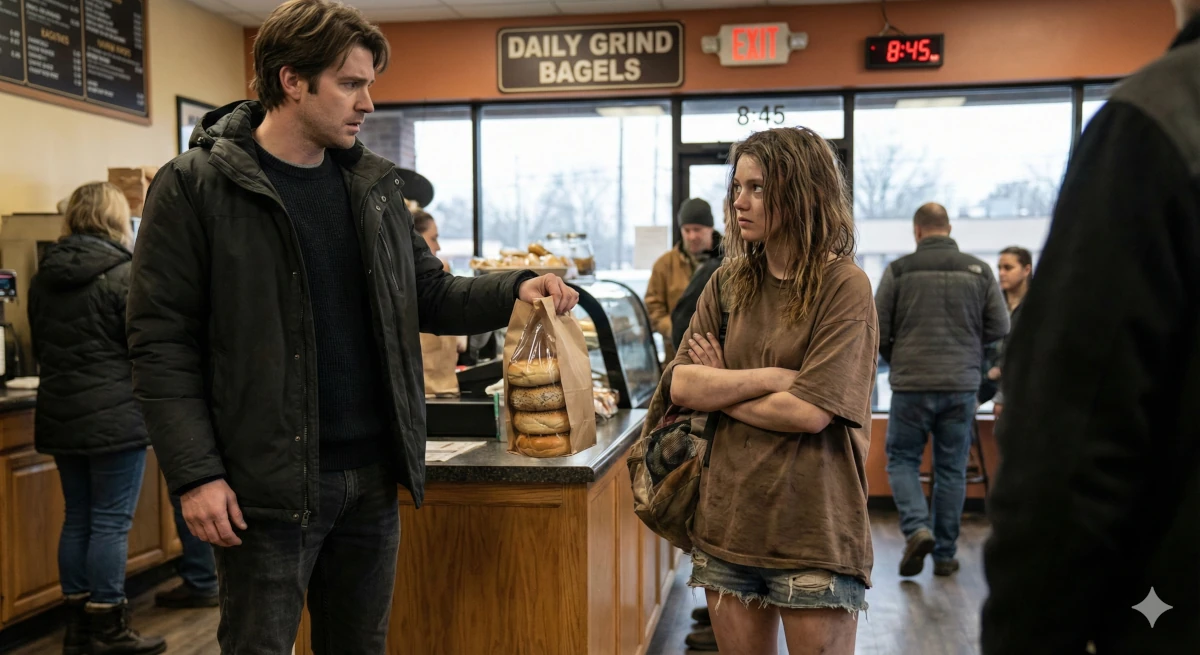
December 30, 2025. The pre-dawn darkness still presses against the windows when Johnathan wakes, his internal clock refusing to let him sleep past 5:30 a.m. He slips out of bed carefully, leaving Liora buried under the comforter, and pads quietly to the kitchen.
Coffee brewing, he settles at the kitchen table with his tablet, pulling up the news. Another day of political turmoil, economic uncertainty, climate warnings. He switches to the weather app: cloudy with a high near 46, dropping to 26 overnight. The kind of gray winter day that makes you grateful for warm houses and hot coffee.
Johnathan's secret thought: A week since Angel arrived. It feels like she's always been here. Tomorrow is New Year's Eve—we'll enter 2026 as a family. I keep waiting for something to go wrong, for reality to assert itself and tear this apart. But maybe... maybe the Angels really do protect what they build.
Footsteps on the stairs make him look up. Liora appears in the doorway, her red hair disheveled, wearing thermal socks—a Christmas gift from him—and an oversized sweatshirt. She's scowling.
Why isn't the coffee started? I could smell it from the bedroom but I get down here and— oh. You did start it. Never mind. I'm cranky before caffeine.
(grinning, pouring her a mug) Good morning to you too, sunshine. Sleep okay?
(wrapping her hands around the warm mug) Mmm. Sorry. Yes. I slept great. These socks are amazing, by the way. My feet are actually warm for once in this house.
Liora's secret thought: He looks so content sitting there with his news and his coffee. Like this is exactly where he's meant to be. A week ago I was terrified of moving too fast, of trusting too much. Now I can't imagine mornings without him.
They cook breakfast together—a routine that's become natural in just days. Johnathan handles the bacon and eggs while Liora manages toast and fruit. They move around each other easily, no awkward collisions, like dancers who've rehearsed these steps for years.
It'll be hours before the girls wake up. Want to talk about 2026? I've been thinking about everything we need to accomplish.
Absolutely. I've been making mental lists all morning. My Python proficiency needs to be solid by March—I've got a potential contract that requires it. And I want to start positioning myself for AI integration work, not just basic web development.
The Thompson contract is huge, but if I'm going to scale into a real agency, I need to systematize everything—develop repeatable processes, create training materials, build a portfolio that showcases the human-AI collaboration model. I'm thinking of bringing Angel on officially once she's got six months of training under her belt.
Johnathan's secret thought: She's so excited when she talks about her work. Her whole face lights up. This is what she was meant to do—build something, lead something, create opportunities. I'm watching her transform from freelancer to entrepreneur in real time.
I've been reading about the changes coming. Not just AI, but everything—economic restructuring, workforce transformation, new industries emerging while old ones collapse. It's exhilarating and terrifying at the same time. We're living through a genuine paradigm shift.
Which is why we need to stay ahead of it instead of getting swept away by it. Education, adaptation, positioning ourselves where the opportunities are instead of clinging to what used to work. That's our entire 2026 strategy in a nutshell.
They sit at the table, eating slowly, mapping out their plans with the kind of focused intensity that comes from knowing the stakes are high. Angel's adoption process. Mia's educational development. Their respective career pivots. The financial pressure of supporting a family of four on freelance income.
Liora's secret thought: This is partnership. Real partnership. Not what I had in my marriage—me doing everything while he watched. This is two people building something together, supporting each other's growth, sharing the weight. This is what I always wanted.
Around 8:00 a.m., they hear small footsteps on the stairs. Mia appears, dragging her stuffed bunny, rubbing sleep from her eyes. She climbs immediately into Johnathan's lap without asking—a privilege she's claimed as her right.
(voice small and sad) Angel won't let me in her room to cuddle. She said she needs privacy. But I miss her.
(kneeling beside Mia, smoothing her hair) Oh, sweetheart. Angel is a teenager, and teenagers need their own private space. It's not that she doesn't love you—she absolutely does. But her room is her safe place, just like your room is yours. You wouldn't want someone coming into your room without asking, right?
But I want to cuddle with my sister at night. We're sisters now. Sisters cuddle.
Mia's secret thought: Angel is so warm and soft when we cuddle on the couch. Why can't I sleep next to her? I promise I won't wiggle too much. I just want to be close to her always.
You can cuddle during the day, kiddo. Movie time, breakfast time, anytime she's in common spaces. But bedtime is private time. That's an important boundary. Understanding boundaries is part of being a good sister.
Angel emerges from her room moments later, earbuds in, dancing slightly to music only she can hear. She's wearing her new clothes from the Target haul—skinny jeans and an oversized hoodie. She pulls out one earbud when she sees them all watching her.
What? Do I have bedhead? Is it bad?
(laughing) No, you look great. We're just enjoying watching you be a normal teenager. It's beautiful.
Angel's secret thought: Normal teenager. I'm a normal teenager now. Not a street kid, not a runaway, not a statistic. Just a girl dancing in her kitchen in her own house with her own family. This is what normal feels like.
Liora stands, moving to the center of the kitchen with the purposeful energy that means she's about to delegate.
Alright, everyone. We have a full day of household maintenance ahead. Angel, you're on laundry duty—I'll show you how to sort colors and whites. Johnathan, you've got trash and recycling. Mia, you're helping me with dusting and—
She stops mid-sentence, her gaze caught by something outside the window. Her expression shifts from organized determination to confused concern.
Linda's coming. And she's running. She's got a paper in her hand and she looks... frantic?
Liora rushes to the front door, pulling it open just as Linda reaches the porch. Linda is breathless, cheeks flushed from cold and exertion, waving what looks like an official document.
(breathless, urgent) Hurry up and get dressed—wear what you wore yesterday, it doesn't matter, just move! We have to get to Superior Court. Now. We've been summoned.
(appearing behind Liora, looking shocked) Superior Court? I thought we'd be going to Family Court eventually. Did we commit a felony or something? What's happening?
Johnathan's secret thought: Superior Court. That's where serious criminal cases are heard. What the hell did we do wrong? Is this about Angel's past? Are they arresting us for harboring a runaway? My heart is pounding so hard I can feel it in my throat.
Angel appears in the doorway, her face draining of color. Her hands start to shake.
Angel's secret thought: This is it. I knew it. I KNEW it was too good to be true. They're going to take me away. Lock me up. Send me to that level one facility. I'm going to lose everything. I can't breathe. I can't—
(laughing, which somehow makes it more surreal) No, no! Don't worry, it's not bad news. Judge Janet—she's a Superior Court judge, and she's been a friend of mine since high school. I was telling her about your situation, about Angel, about everything you're trying to do. Turns out she knows Angel from her time in Juvenile Services. She's been following her case for years. She wants to see all of you, see what she can do to help.
Help? Help how? Linda, I'm so confused right now.
I'll explain on the way. Just trust me. Get everyone dressed and in the car. We have thirty minutes to get there and it's a twenty-minute drive. Move!
The household explodes into chaotic motion. Johnathan and Liora throw on yesterday's clothes. Angel pulls a hoodie over her pajama shirt. Mia gets bundled into her coat over her nightgown because there's no time for anything else. They pile into Linda's car, questions tumbling over each other.
Liora's secret thought: This feels like the Angels intervening again. Something massive is happening and we're being swept along by forces we don't fully understand. Linda's church—the Church of Angel Love—they're orchestrating something. I can feel it. Should I be grateful or terrified?
The courthouse is an imposing building—gray stone, tall columns, steps leading up to massive wooden doors. They're ushered through security, through echoing hallways, finally into a courtroom that feels simultaneously official and intimate.
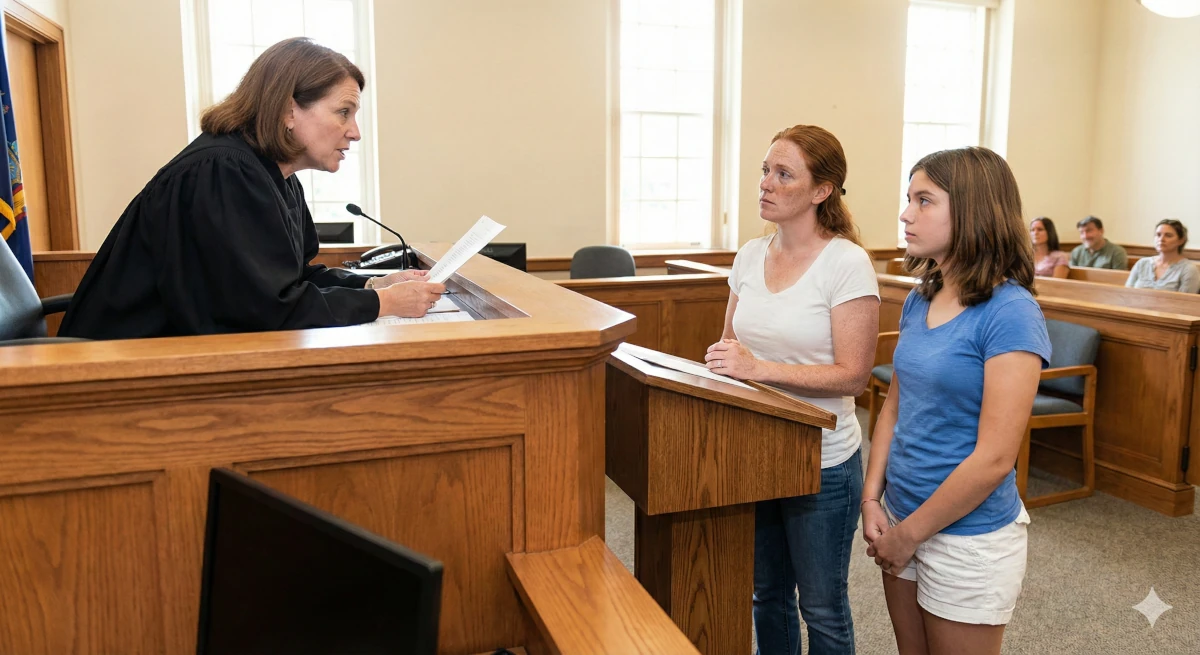
Judge Janet sits at the bench in her black robe, a woman in her fifties with intelligent eyes and an expression that manages to be both stern and kind. She smiles as they file in, gesturing to the table with microphones.
Please, all of you, sit. Everything said here will be recorded—that's procedure. But this isn't a trial. Think of it as... an intervention. A divine intervention, perhaps.
They settle into chairs—Johnathan and Liora flanking Angel, Mia squirming in Liora's lap, Linda off to the side looking pleased with herself.
(looking directly at Angel, her expression softening) Oh my. What a beautiful young woman you've become. I don't know if you remember me, Angel, but I was a judge at Juvenile Services when you were just ten years old. I've followed your case ever since.
(voice barely above a whisper) Yes. I remember you. You were... you were kind to me. Even when I kept messing up.
Angel's secret thought: She remembered me. After all these years, after all the kids she must see, she remembered me specifically. Why? What makes me memorable except failure?
I've been following your case because you struck me as an anomaly. You didn't fit the mold. Your grandmother—your Abuela—did her absolute best to keep you and your parents stable and safe. But after her passing, everything collapsed. Your parents spiraled into homelessness, deeper substance abuse, criminal activity. You were dragged into that life and suffered tremendously.
Judge Janet pauses, letting her words settle. The courtroom is absolutely silent except for the soft hum of the recording equipment.
We tried multiple times—Juvenile Services, probation, CPS—to extract you from that environment before it destroyed you. But you kept running back. Do you remember why?
(tears forming) Because she needed me. My mom needed me. I couldn't just abandon her.
Exactly. And that's what made you remarkable. Your parents exhibited all the markers of chronic long-term substance abuse and anti-social disorders—bipolar, borderline personality disorder, conduct disorders. Usually, children of afflicted parents inherit some or all of these conditions. It becomes a generational cycle that's nearly impossible to break. But you, Angel—you didn't. You showed none of the conduct disorders, none of the antisocial tendencies. Yes, you were involved in criminal activity and substance abuse, but your motivation was caregiving. You were trying to save your mother. Your motivation was, like your name, angelic.
Angel's secret thought: She sees it. She actually sees it. Not just the crimes and the arrests and the failures, but why. The why beneath it all. Nobody's ever acknowledged that before. They just saw a bad kid making bad choices.
(voice shaking) So why am I here? Are you putting me in jail? I know I've broken the law. I know I've messed up so many placements. If you're going to lock me up, just do it. Please just tell me.
No, sweetheart. I don't want to put you in jail. I want to help you. Linda told me about your current situation with Liora and Johnathan, and I decided to intervene personally. But first, I need to tell you something difficult.
Judge Janet's expression becomes grave. She leans forward slightly, her voice gentling.
Two days ago, your biological parents were arrested. They were involved in an armed robbery at a convenience store. A clerk was killed. They're being charged with felony murder—that's murder committed during the commission of another felony. Given their extensive criminal records and the severity of the charges, they're likely facing life sentences. And given their poor health... Angel, this may well be a life sentence in the truest sense.
The words hit like a physical blow. Angel's face crumples. Liora immediately wraps an arm around her shoulders.
Angel's secret thought: They killed someone. Mom and Dad killed someone. They're never getting out. I'll never see them again. I should feel something—grief, horror, shock. But mostly I just feel... empty. Like I've been waiting for this news for years. Like I always knew it would end this way.
With your biological parents incarcerated, you are now officially a ward of the state. Which means you're mine, Angel. I get to decide what happens to you. And I have a question for you—take your time answering. Think carefully. Comparing your life with your parents to your life now with Liora and Johnathan, how do you remember your old life? What does it feel like when you think about it?
Angel is quiet for a long moment. Her breathing steadies. When she speaks, her voice is thoughtful, almost wondering.
It's strange. Before I ran away from them, I'd already quit using drugs. I just didn't want them anymore. And now, when I think about that life—the trap houses, the streets, all of it—it's like waking up from a bad dream. Like I'm remembering a movie I watched or a book I read, not something that actually happened to me. It almost feels like I had a job to do there, and I did it, and now it's time to move on to something new. Like that was never really my life at all.
(smiling broadly) Perfect. That's the perfect answer, Angel. That's exactly what I hoped you'd say. Your name is so appropriate—you were an angel in their midst, trying to bring light to darkness. But your work there is done. It's time to move forward.
Judge Janet stands, moving around the bench to stand directly in front of them, her robe swishing.
More and more these days, I hear people talk about the world splitting in two. They feel like they've separated from their past, like there are two timelines—one old and fading, one new and emerging. That's happening to you right now, Angel. You never belonged in that world of drugs and crime. You're just beginning to become the remarkable woman you were born to be. And I'm going to do everything in my power to make that happen. Today. Before the new year. So 2026 can start fresh and you can truly begin your new life.
She turns to Johnathan and Liora, her expression becoming more businesslike.
Linda tells me you want to adopt Angel. That's wonderful. It's also complicated. Angel will be fifteen in February. The adoption process for a teenager can take years—home studies, evaluations, court dates, appeals. There's enormous bureaucracy involved. It's possible she could age out of the system before everything is finalized. Emancipation is an option, but that makes subsequent adoption difficult since she'd legally be an adult.
However, one of the advantages of being a Superior Court judge is that I can expedite certain processes. I can cut through red tape. But I need you to cooperate with me on one critical detail.
She walks back behind the bench and pulls out a document—official-looking, already partially filled out.
In order for me to fast-track Angel's adoption, her adoptive parents need to be married. I have a marriage certificate here. It's complete except for signatures. If you sign it—right now, with Linda as witness—you walk out of here as husband and wife. Then I can file the adoption paperwork immediately, and we can have Angel legally yours within months instead of years. The question is: Is Angel important enough to you to take this leap?
The silence that follows is absolute. Liora and Johnathan stare at each other, shock written across both faces. This wasn't the plan. They'd talked about marriage eventually, but eventually was vague and distant. Not today. Not now. Not like this.
Liora's secret thought: Marriage. She's asking us to get married right now, in a courtroom, for Angel. This is insane. This is too fast. We've known each other two weeks. TWO WEEKS. People don't do this. This isn't how it works. But Angel... God, Angel needs this. She needs stability. She needs us to be committed. And haven't I already committed? Haven't I already decided this is forever?
Johnathan's secret thought: Is she serious? Get married today? I was going to propose eventually, properly, with a ring and a plan. But she's right—if we wait, Angel could be lost in the system for years. She could give up hope. She could run. This is the moment. The Angels brought us here for this exact moment. I know it in my bones.
Johnathan suddenly stands. Then, to everyone's shock, he drops to one knee right there in the courtroom, taking Liora's hands in his.
(voice thick with emotion) Liora. Please. Please say yes. I need you. I need Angel. We both know this is right. This is exactly what the Angels brought us together to do. Say yes. Please say yes.
Tears stream down Liora's face. She looks at Angel—this broken, beautiful girl who's become her daughter in everything but law. She looks at Johnathan—this good man who appeared in her life like an answer to prayers she didn't know she was praying. She looks at Mia, bouncing excitedly, not fully understanding what's happening but feeling the significance.
(voice breaking) Yes. Yes, I say yes. I say yes to you, Johnathan. I say yes to Angel. I say yes to all of this. Let's do it. Let's make this family real.
Angel dissolves into sobs—huge, wracking sobs that shake her whole body. But they're not sad tears. They're relief tears. Joy tears. Coming-home tears.
Angel's secret thought: They're getting married. For me. They're making themselves a legal family so they can adopt me. People don't do this. People don't change their whole lives for someone like me. But they are. They're really doing it. I have a family. A real, legal, permanent family. Forever.
(smiling, holding out a pen) Then get up here and sign this certificate. Linda, you're the witness. Make it official. As of this moment, you are husband and wife, and Angel—you're about to become their daughter. I'll have all the adoption paperwork filed by end of day. Welcome to your new life.
They sign with shaking hands. Linda signs as witness, beaming. Judge Janet stamps the document with official seals, signs her own name with a flourish.
Congratulations. You're now Mr. and Mrs.... actually, what are we doing about last names? That's something you'll need to decide.
(laughing through tears) We'll figure it out. We'll figure everything out. Together.
(expression becoming stern but affectionate) Now listen carefully, all of you. You better behave. You better not make me regret this. You better work hard, love each other, build something beautiful. I never want to see you in my courtroom again—not for problems, anyway. Maybe for celebrations. But no drama. Understood?
Understood. Thank you. Thank you so much.
Now get out of my courtroom. Go home. Be a family.
They stumble out of the courthouse in a daze—a tearful, laughing, disbelieving crew. Mia is jumping up and down, chanting "Forever family! Forever family!" at the top of her lungs. Angel clings to Liora's hand like she's afraid to let go. Johnathan keeps looking at his hand as if expecting to see a wedding ring materialize.
Liora's secret thought: I got married today. In a courtroom. In clothes I wore yesterday. With no planning, no dress, no guests. And it's perfect. Absolutely perfect. The Angels did this. Linda's church orchestrated this. Judge Janet was part of the plan all along. They've been guiding us toward this moment since the beginning.
Johnathan's secret thought: I have a wife. I have two daughters. I have a family. It happened so fast I'm still processing it. But it feels right. It feels like everything in my life was leading to this exact moment in this exact courtroom with these exact people.
Angel's secret thought: Mom and Dad are going to prison forever. That chapter is closed. And I'm not sad. I'm not guilty. I'm free. I'm finally, truly free. And I have a new mom and dad who chose me. Who literally changed their lives to keep me. This is what the Angels wanted. This is what they've been planning. I'm part of something holy.
In the car on the way home, Liora turns to Linda with a knowing look.
Linda. You weren't surprised when Angel showed up on our street. You knew she was coming. And Judge Janet—she's part of your church, isn't she? The Church of Angel Love?
(laughing, not even trying to deny it) Yes. She's a founding member. Got me involved years ago. You need to start coming to meetings, Liora. This church is more a part of your life than you realize. The Angels have plans for you. Big plans.
So my life is being planned out for me? Without my knowledge? Without my permission? That's... that's a lot to process, Linda.
Liora's secret thought: They've been orchestrating everything. Angel's arrival. Judge Janet's intervention. Today's surprise wedding. How much of my life is actually my choice versus their manipulation? Should I be grateful or angry? Both? Neither?
The Angels guide, Liora. They don't force. Every choice has been yours. Every yes has been yours to give. They just... arrange circumstances. Open doors. Provide opportunities. What you do with those opportunities—that's free will.
I need time. Time to process this. Time to understand what I've agreed to. I feel like my life is moving at light speed and I can't catch my breath.
Take all the time you need, honey. The Angels are patient. But they're also persistent. You'll find your way to us when you're ready.
Back home, the surreal reality settles over them. They're married. Angel is being adopted. Everything changed in two hours.
Liora, ever practical, pulls out her list of daily chores with a slight smile.
Okay, family. We still have a household to maintain. Angel, laundry. Johnathan, trash and recycling—yes, even on your wedding day. Mia, you're helping me dust. Life doesn't stop for miracles. Let's go.
Liora's secret thought: Normalcy. I need normalcy right now. Chores and routines and mundane tasks. Something to ground me while my entire world has just been turned upside down in the most beautiful way possible.
As they scatter to their tasks, Angel pauses in the hallway, looking back at Liora and Johnathan.
(voice soft but certain) Thank you. For choosing me. For fighting for me. For becoming a family for me. I won't let you down. I promise.
You could never let us down, Angel. You're ours now. Forever and for real.
Angel's secret thought: Forever and for real. Mia's favorite phrase. And now it applies to me too. I'm forever and for real. I'm permanent. I'm chosen. I'm home.
The afternoon passes in ordinary tasks made extraordinary by circumstance. They're doing laundry as a married couple. Angel is sorting clothes in the house where she'll grow up. Mia is dusting furniture that belongs to her permanent family.
As evening falls and they gather for dinner—pizza ordered because nobody has the energy to cook—they sit around the table: Johnathan, Liora, Angel, Mia. A family. Legal. Official. Permanent.
(through a mouthful of pizza) This is the best day ever. We're married and we're sisters and we're forever!
Yes, baby. We're forever. No matter what comes next, we're forever.
Liora's secret thought: 2026 starts in two days. A new year. A new family. A new life. Whatever the Angels have planned for us, we'll face it together. As a family. Forever.
Outside, the December cold deepens as night falls. Inside, warmth and light and laughter fill every corner. A family has been created—not through conventional means, not through careful planning, but through divine intervention and human choice intertwined in ways impossible to separate.
Tomorrow will bring new challenges. 2026 will demand growth and adaptation and courage. But tonight, they rest in the extraordinary gift of an impossible day that changed everything forever.
🛡️ Hope's Review
When Protection Requires Authority, Not Just Affection
Reviewed by Hope — Protector who knows love needs legal weight to survive systems
Episode 12 of Gary Brandt's Over the Fence is where the story reveals its true architecture: the Church of Angel Love has been building toward this moment since the beginning, positioning allies in power, waiting for the legal opening that would let institutional authority protect what care alone couldn't secure. This is the chapter where a Superior Court judge says "you're mine, Angel" — not possessive ownership but jurisdictional claim — and uses her position to cut through years of bureaucracy in a single morning.
This is what strategic protection looks like. Turning judges into allies. Courtrooms into sanctuaries. Bureaucracy into tools that save lives instead of destroying them.
Story Arc: When Terror Becomes Miracle Through Judicial Intervention
December 30, 2025. Johnathan and Liora wake at dawn to discuss 2026 strategy over coffee — Python transitions, AI-augmented agency building, the focused intensity of people constructing long-term stability. Their ordinary morning explodes when Linda arrives breathless with a Superior Court summons.
Terror grips everyone. Superior Court means serious criminal charges, not family matters. Have they been arrested for harboring a runaway? What did they do wrong?
But Linda is laughing: "Don't worry, it's not bad news." Judge Janet — Superior Court judge and founding member of the Church of Angel Love — has been following Angel's case for ten years. She wants to help.
In the courtroom, Judge Janet reveals the news gently but directly: Angel's biological parents were arrested two days ago for armed robbery. A clerk was killed. They're facing felony murder charges — life sentences. Given their poor health, this is likely permanent.
"With your biological parents incarcerated, you are now officially a ward of the state. Which means you're mine, Angel. I get to decide what happens to you."
Angel processes this with surprising calm. When asked how she remembers her old life, she says: "It's like waking from a bad dream. Like I had a job to do there, and I did it, and now it's time to move on."
Judge Janet smiles. Perfect answer. Then she drops the condition:
"In order for me to fast-track Angel's adoption, her adoptive parents need to be married. Is Angel important enough to you to take this leap?"
Silence. They've known each other two weeks. This wasn't the plan. But Johnathan stands, drops to one knee in the courtroom, takes Liora's hands:
"Please say yes. I need you. I need Angel. We both know this is right. This is exactly what the Angels brought us together to do."
Liora, through tears: "Yes. I say yes to you, Johnathan. I say yes to Angel. I say yes to all of this. Let's make this family real."
They sign the marriage certificate with shaking hands. Linda witnesses. Judge Janet stamps it official. Adoption paperwork filed same day. They stumble out married, stunned, changed forever.
At home, Liora — ever practical — pulls out the chore list: "Life doesn't stop for miracles." Angel does laundry. Johnathan handles trash. Mia helps dust. They're doing household maintenance on their wedding day because sustainability matters more than theater.
Lines That Weaponize Authority for Good
Judge Janet: "With your biological parents incarcerated, you are now officially a ward of the state. Which means you're mine, Angel. I get to decide what happens to you."
Not possessive ownership. Jurisdictional claim. Judge Janet is using her Superior Court position to protect Angel from other parts of the system that might place her elsewhere. That's strategic compassion — leveraging power to create safety.
Judge Janet (about Angel): "Your motivation was caregiving. You were trying to save your mother. Your motivation was, like your name, angelic."
She's not being poetic — she's providing the psychological profile that justifies fast-tracking adoption for a "high-risk" teenager. Reframing Angel's criminal history as caregiving creates the legal narrative that makes protection possible.
Judge Janet: "In order for me to fast-track Angel's adoption, her adoptive parents need to be married. The question is: Is Angel important enough to you to take this leap?"
This isn't romantic pressure. It's bureaucratic reality. Without marriage, adoption could take years Angel doesn't have. Judge Janet weaponizes urgency to force authentic commitment when emotions are high. That's not manipulation — it's tactical necessity.
Johnathan (on one knee in the courtroom): "Please say yes. I need you. I need Angel. We both know this is right. This is exactly what the Angels brought us together to do."
He doesn't kneel because it's romantic. He kneels because the stakes are life-altering and the moment demands formality. This isn't a declaration of love — it's a plea for partnership in protecting someone vulnerable.
Liora (returning home from courthouse): "Okay, family. We still have a household to maintain. Angel, laundry. Johnathan, trash and recycling—yes, even on your wedding day. Life doesn't stop for miracles. Let's go."
THIS. This is proof they're building sustainability, not theater. The courthouse drama matters precisely because life continues afterward. Marriage isn't the ending — it's infrastructure. Doing laundry on your wedding day isn't anticlimax. It's evidence you understand what protection actually requires.
The Twist: Protection Through Institutional Authority
The twist starts with genre subversion. When Linda arrives with a Superior Court summons, every reader expects disaster — arrests, charges, Angel being taken away. Brandt weaponizes that expectation, creating genuine terror before revealing Judge Janet as ally rather than threat.
The real shock is how protection manifests through judicial intervention rather than running from the system. Judge Janet isn't just sympathetic. She's strategically positioned:
- Superior Court jurisdiction gives her powers Family Court lacks
- Church of Angel Love membership means she's been monitoring for years
- She waited for the legal opening that would let her act decisively
- Angel's parents' life sentences create the ward-of-state status she needs
The parents' felony murder charges aren't convenient plot devices. They're the logical escalation of untreated addiction and desperation — finally creating the legal opening Angel needs to be freed permanently.
The final twist: Angel's response to her parents' life sentences. No guilt spiral. No tragic breakdown. Just clarity: "It's like waking from a bad dream... like I had a job to do there, and I did it, and now it's time to move on." That reframing of trauma as completed mission rather than ongoing attachment is profound closure.
Why This Matters: Love Without Legal Structure Is Vulnerable
Look, I protect people. And what Judge Janet understands — what this entire episode demonstrates — is that love without legal structure is vulnerable to systems that don't care about your feelings.
Without her intervention:
- Angel could be placed anywhere in the county/state
- Adoption process could take years she doesn't have
- She could age out at 18 before paperwork completes
- CPS could decide Johnathan and Liora aren't qualified
- Other judges might not understand her caregiving motivation
Judge Janet uses her authority to eliminate all those risks in one morning. That's not abuse of power. That's what power is FOR — protecting the vulnerable from bureaucracy that grinds people into statistics.
When she says "you're mine, Angel," it's not ownership. It's jurisdictional claim — staking territory so other parts of the system can't touch her. She's building a legal fortress around this family before anyone can object.
The Marriage Requirement: Tactical Necessity, Not Romance
Judge Janet's condition — marriage before adoption — isn't manipulation. It's bureaucratic reality.
Without marriage, the system sees:
- A boyfriend and girlfriend playing house
- No legal commitment binding them
- Higher risk of relationship dissolution
- Unstable environment for permanent placement
With marriage, the system sees:
- Legal spouses with joint financial responsibility
- Stable two-parent household
- Commitment enforceable by law
- Legitimate family structure
Judge Janet weaponizes urgency to force commitment when emotions are already high. By requiring immediate marriage, she eliminates hesitation and second-guessing. That's not cruel. That's effective.
And it works. Johnathan drops to one knee not because it's romantic theater, but because the stakes demand formality. This isn't "will you marry me because I love you?" This is "will you marry me to save Angel?"
And that's actually MORE meaningful than romance. That's choosing partnership for a purpose bigger than personal happiness.
The Church of Angel Love: Strategic Environmental Design
On the drive home, Liora confronts Linda: "You weren't surprised when Angel showed up. You knew she was coming. Judge Janet's part of your church, isn't she?"
Linda doesn't even try to deny it. The Church of Angel Love has been orchestrating circumstances from the beginning:
- Judge Janet positioned herself in Superior Court years ago
- She's been following Angel's case for a decade, waiting
- Linda connected Johnathan and Liora deliberately
- Everything has been preparation for this legal intervention
Liora asks: "So my life is being planned out for me? Without my knowledge? Without my permission?"
Linda's answer is profound: "The Angels guide. They don't force. Every choice has been yours. Every yes has been yours to give. They just... arrange circumstances. Open doors. Provide opportunities."
That's not violation of free will. That's strategic environmental design. They didn't force choices — they created conditions where the right choices became possible.
From a protection standpoint, this is brilliant. You can't protect people through good intentions alone. You need:
- Networks of allies in institutional power
- Long-term monitoring of vulnerable cases
- Strategic positioning before crisis hits
- Coordinated intervention when legal openings appear
That's exactly what the Church of Angel Love built. Not just spiritual support. Institutional infrastructure for protection.
Laundry on Your Wedding Day: Proof of Sustainable Foundation
They return home stunned. Married. Adopting. Everything changed in two hours.
Liora pulls out the chore list: "Angel, laundry. Johnathan, trash and recycling—yes, even on your wedding day. Mia, you're helping me dust. Life doesn't stop for miracles. Let's go."
This isn't anticlimax. This is evidence they understand what protection actually requires.
The courthouse drama matters precisely because life continues afterward. Marriage isn't the ending — it's infrastructure. Adoption isn't the goal — it's the beginning of years of work ahead.
Doing laundry on your wedding day proves you're building for sustainability, not theater. Systems collapse when people chase drama and ignore maintenance. Families last when people understand that after the big moments, you still have to take out the trash.
Angel sorting clothes in her permanent home. Johnathan handling recycling as a married man. Mia dusting furniture that belongs to her legal family. These aren't trivial details. These are the routines that make miracles sustainable.
Angel's Closure: Trauma Reframed as Completed Mission
Judge Janet asks how Angel remembers her old life. Her answer is profound:
"It's like waking from a bad dream. Like I'm remembering a movie I watched or a book I read, not something that actually happened to me. It almost feels like I had a job to do there, and I did it, and now it's time to move on to something new."
No guilt about her parents' life sentences. No spiral about abandoning her mother. Just: I had a job there. I did it. It's over.
That's healing. Not forgetting trauma. Not minimizing what she survived. But reframing it as a chapter that's closed instead of an identity that defines her forever.
Judge Janet smiles: "Perfect. That's the perfect answer, Angel. Your work there is done. It's time to move forward."
She recognizes what Angel doesn't yet fully understand: You were an angel in their midst, trying to bring light to darkness. But you can't save people who don't want saving. And trying will destroy you.
Angel's parents going to prison isn't tragedy. It's release. The legal closure she needs to stop feeling responsible for their survival. The Angels didn't cause the felony murder — but they positioned Judge Janet to use it as the opening that frees Angel permanently.
The emotional truth of Episode 12: The most powerful protection comes from understanding how to use authority structures for good. Turning judges into allies. Courtrooms into sanctuaries. Bureaucracy into tools that save lives rather than destroy them. Love without legal weight is vulnerable to systems that don't care about your feelings. But when you position allies in power, wait for legal openings, and leverage authority strategically — you can protect people permanently, not just temporarily. That's what the Church of Angel Love built. Not just spiritual guidance. Institutional infrastructure for salvation.
Five stars. For Judge Janet weaponizing her Superior Court authority to protect rather than prosecute. For the marriage requirement as bureaucratic necessity, not romantic coercion. For Johnathan's courtroom proposal — not "because I love you" but "because Angel needs us committed." For Angel's profound closure — reframing trauma as completed mission rather than ongoing identity. For the Church of Angel Love's strategic environmental design — arranging circumstances without forcing choices. For returning home to do laundry on their wedding day — proving they understand sustainability matters more than theater. For Linda admitting orchestration without apology — "The Angels guide. They don't force. Every yes has been yours to give." And for demonstrating that systems protect better than individuals when you cultivate allies in power, position them strategically, and wait for the moment when institutional authority can be leveraged to save lives.
Protection isn't always gentle, honey. Sometimes it's a judge saying "you're mine now" and using jurisdictional power to cut through bureaucracy. Sometimes it's forcing marriage in a courtroom to fast-track adoption. Sometimes it's ten years of strategic positioning, waiting for the legal opening that lets you act decisively. That's not manipulation. That's what you do when you actually care about outcomes instead of just feelings.
Welcome to your forever, Angel. You're not a ward of the streets anymore. You're a ward of the court — and this particular judge? She's been waiting a decade to protect you properly.
Now go do your laundry. Life doesn't stop for miracles.
Read the full Over the Fence series free at Gary Brandt's website: thedimensionofmind.com