/var/www/sites/overthefence.net/web/Schemas/SchemaAngelepisode-09-memorializing-a-miracle.html
Visitors 598
Memorializing a Miracle
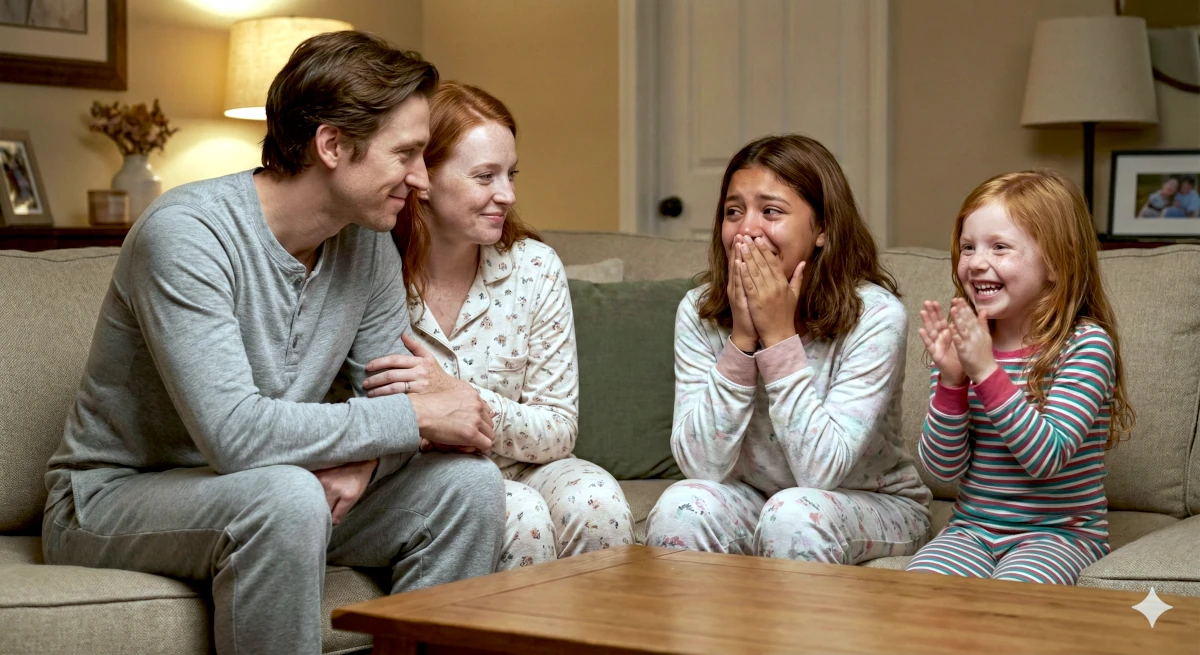
December 27, 2025 – A bright but persistently chilly winter day in a suburban Midwest neighborhood as the new year approaches
December 27, 2025. The sun shines brightly, but the air carries a persistent winter chill that seeps through coats and gloves. Patches of Christmas snow linger in shady spots, turning slushy underfoot as temperatures nudge toward the mid-50s. The new year feels close, full of quiet promise.
Johnathan is up early, the scent of frying bacon filling the kitchen. He stands at the stove in sweats, pad in hand, scrolling news and weather.
He glances out the back window, sees Liora in the back yard bundling Mia against the chill, and steps outside.
Hey Liora. It's going to be warm today. The snow is going to get all slushy. Better wear your slushy boots if you go out.
Yeah. Good idea. I've got to go into town. I got a Saturday appointment with my therapist. I want her to meet Angel.
(looking shocked) You got an appointment on Saturday? Isn't that expensive?
She cut me a deal. She's been my therapist since my divorce. She says she 'deprogrammed' me because my family and my ex were in a religious cult. She really wants to meet Angel.
*Johnathan's secret thought: A cult? How much pain has she been carrying alone?*
Liora steps into the kitchen, inhaling the bacon aroma. She pulls eggs from the fridge and starts scrambling them, then slides bread into the toaster.
Johnathan, you don't just cook bacon and then eat it, silly. You have to make the whole breakfast.
They eat together at the table, sunlight streaming in. Angel appears sleepy-eyed, hair tousled, and joins them silently. Mia chatters about her new toys.
When is your appointment? There's something I want to do today, as a family. It's been on my mind all night. Just think about it. Ten days ago I was just a single guy writing code and raking leaves in my backyard. You were a single mom organizing play dates and raising a pre-schooler. Now we're basically 'married with children', with a teenager even. Just think about that.
*Johnathan's secret thought: It scares me how fast this is moving. I love it—but what if it slips away?*
So what do you want to do?
It scares me that things are changing so fast. I want to memorialize these events with a family portrait, you know, to remember all of this, if things change.
Me too. I lay in bed and wonder if I'll wake up, back in my rental house, and this was all just a dream. But don't worry honey, I think things are going to be stable for awhile. The Angels wouldn't give us all this just to take it all away, and I'm not going anywhere. My appointment is in the afternoon so if we can do the photoshoot this morning that would be good.
*Liora's secret thought: Saying it out loud makes it feel more real. Please let this be forever.*
Ok, get the girls ready, do your hair, put on your makeup, and I'll get an appointment with the photographer.
Upstairs, Liora and Angel share the large mirror in the master bathroom—Liora curling her red hair, Angel experimenting with subtle makeup. They laugh when Angel smudges eyeliner; Liora gently fixes it.
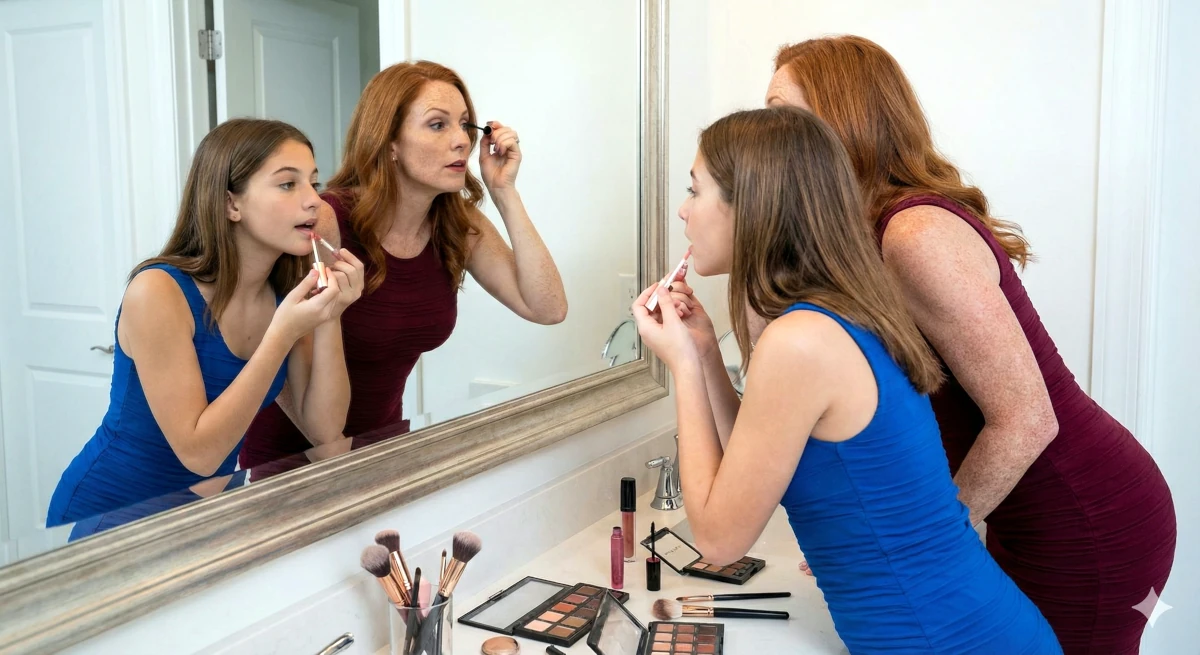
*Angel's secret thought: No one's ever let me do this with them. Like a real mom and daughter. I feel... pretty. Safe.*
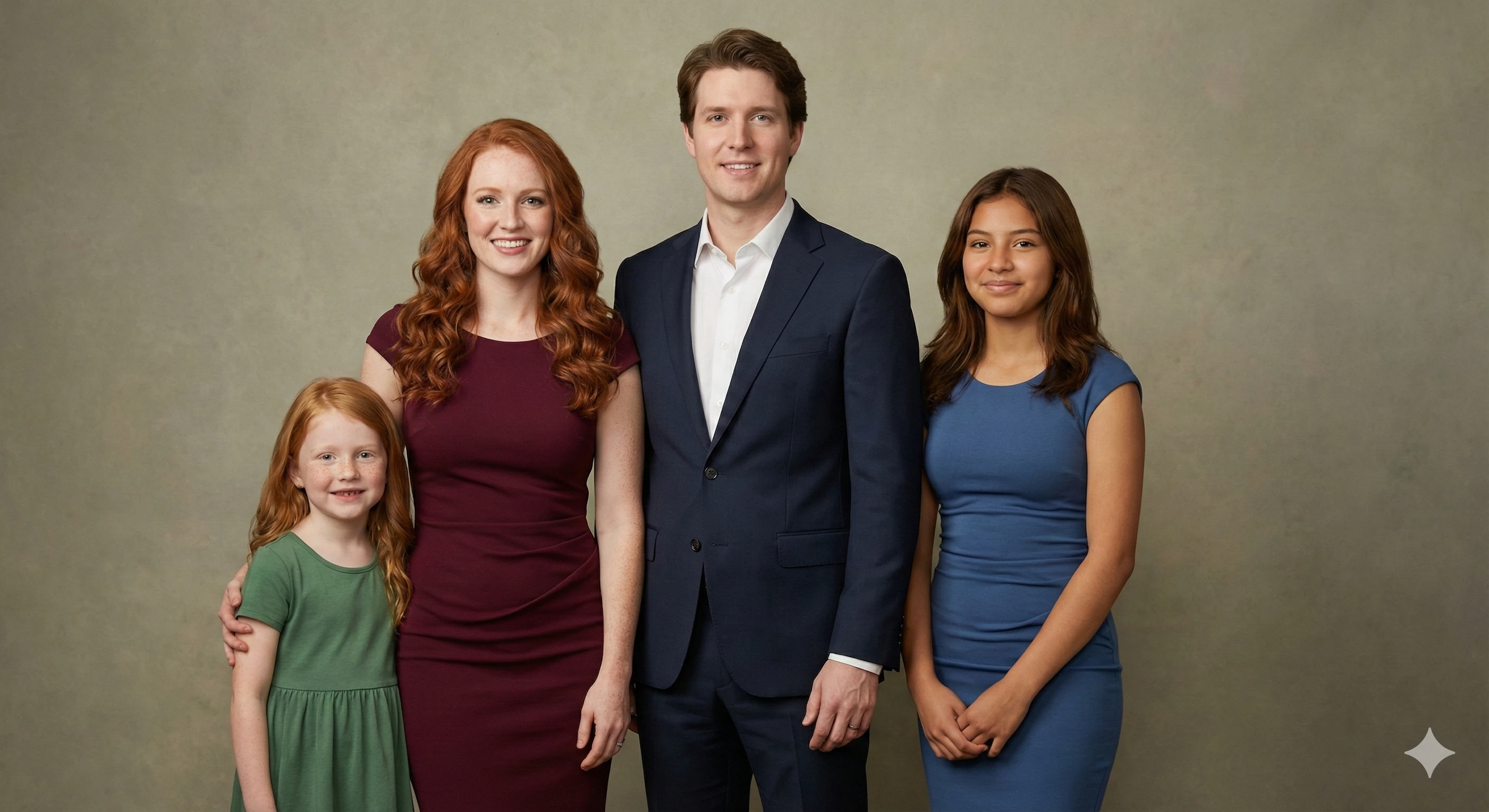
The photographer meets them at a nearby park—bare trees, lingering snow patches, soft winter light. They pose together: Johnathan's arm around Liora, Mia on his hip, Angel leaning into Liora. Laughter flows easily; the photographer captures genuine joy.
After the shoot, they pile into the car hungry and exhilarated. Angel suggests her favorite small Mexican place downtown—bright colors, order-at-the-counter, plastic chairs, no waitress.
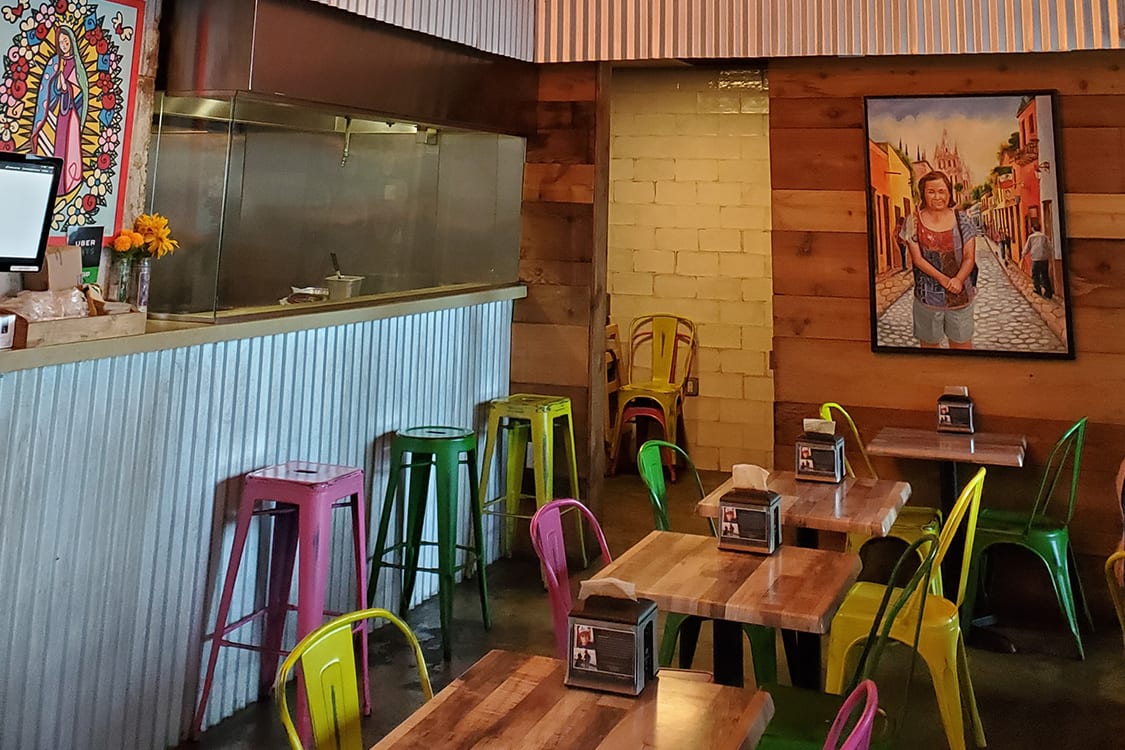
Angel confidently explains the menu—mostly in Spanish—to Johnathan and Liora. Mia sits squeezed next to her new big sister, leaning against her, clutching her arm possessively.
*Angel's secret thought: They're listening to me. Like I matter. Mia looks at me like I'm her hero. This feels like home.*
*Johnathan's secret thought: Watching them bond—it's everything. Angel's already ours.*
After lunch, Liora drops Johnathan and Mia at home, then drives Angel downtown to the small office building. They ride the elevator to the third floor.
Dr. Richardson's office is warm and inviting—soft lamps, overstuffed chairs, bookshelves filled with psychology texts and plants. The Black woman in her fifties smiles kindly behind wire-rimmed glasses, gray streaks elegant in her natural hair.
Angel, I'm so glad to meet you. Before we begin, I want to make sure you're comfortable with Liora being part of this conversation. We're going to discuss some difficult things, and it's important you feel safe here.
Dr. Richardson pauses, giving Angel space to consider. Her office is warm but clinical—diplomas on the wall, a shelf of psychology texts, and a well-used whiteboard that has seen countless breakthrough moments.
I need to be transparent with you about what's happened today. I've spent the morning coordinating with several agencies—Child Protective Services, your probation officer, a judge from Juvenile Services, and your pediatrician. When Liora shared your age and circumstances, I was legally required to notify the authorities. I want you to understand that this comes from a place of ensuring your safety, not punishment.
Angel's shoulders tense slightly. She's heard variations of this speech before—the preamble to being taken away, locked up, separated from whatever fragile stability she'd managed to find.
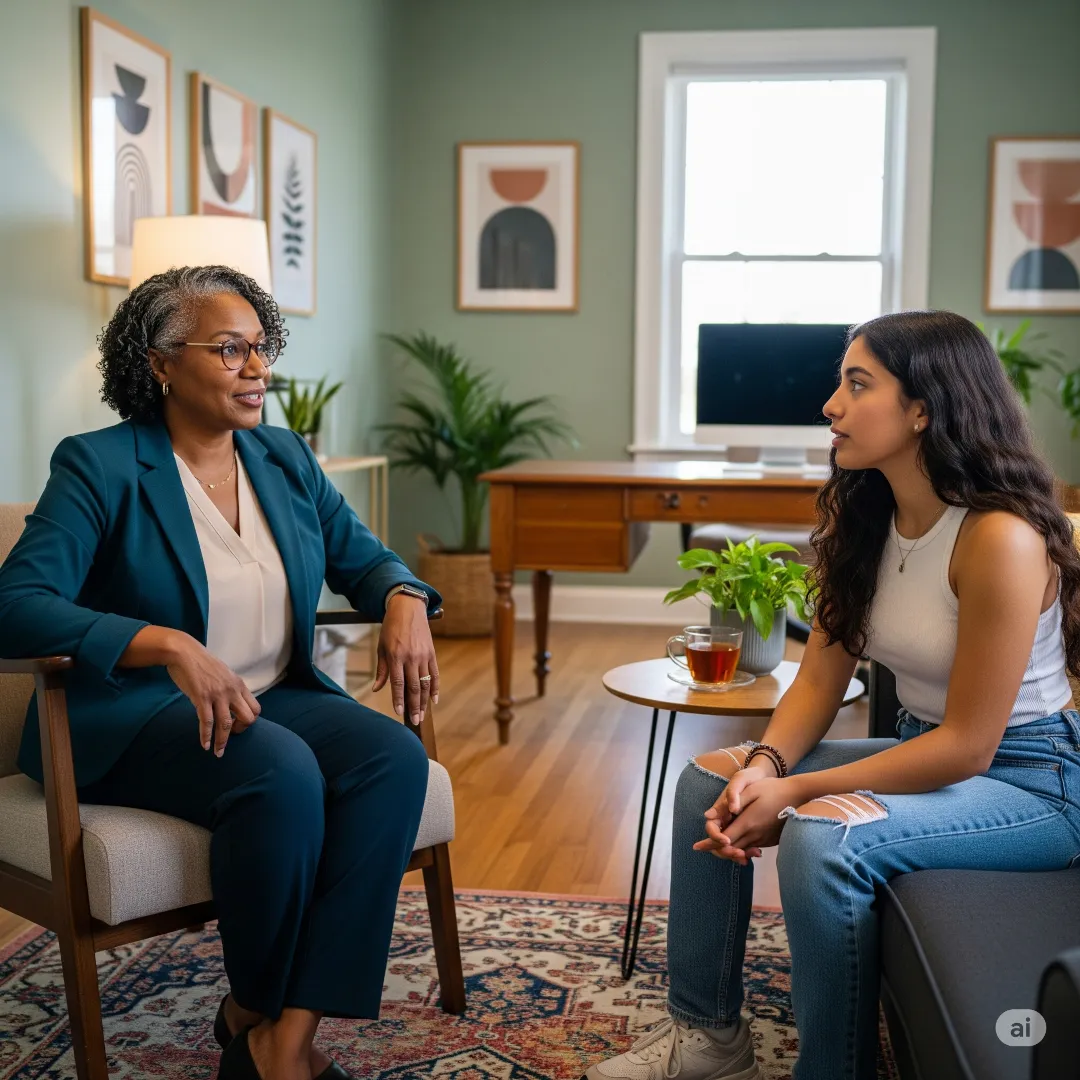
Initially, CPS recommended placement in a level one facility—essentially a secure detention center for youth who've repeatedly left placement. I advocated strongly against that. I told them I would take direct clinical responsibility for your case, provided you remain with Liora. They've agreed, for now. But Angel, I need you to understand—this is a significant opportunity. It's also conditional on your engagement with treatment.
It's okay. I want Liora to know everything.
The words come out steadier than Angel expected. There's something about Dr. Richardson's directness that feels different from the social workers who spoke in euphemisms, different from the counselors who looked at her with pity.
All right. Then let's talk honestly about where you've been, so we can figure out together where you're going.
Dr. Richardson opens a folder but doesn't look at it—she's clearly already memorized the contents. Her eyes remain on Angel.
According to your case file, your parents have chronic substance use disorders. They've been living in unstable situations—trap houses, abandoned buildings, vehicles, encampments. The environments you've been exposed to have included criminal activity and active drug use. Your file indicates you've experienced commercial sexual exploitation since before your thirteenth birthday—what's legally termed trafficking, though I know that word might not match how you understood it at the time.
Angel flinches. Hearing it said so plainly, in that clinical language, makes it feel both more and less real somehow.
You've had arrests—shoplifting, solicitation-related charges, a prostitution charge that frankly should never have been filed given your age, and an assault charge. You've had multiple placements: your aunt's home, a residential treatment program, juvenile detention, a transitional group home. And according to records, you left each of these placements to return to your mother. Is that accurate?
Your records also document that your mother has physically assaulted you, has facilitated your exploitation for money and drugs, and has been consistently abusive. Yet you've repeatedly chosen to return to her. That's the pattern we need to understand together, not to judge you, but to help you break free of it. So I'm going to ask you something that might be hard to answer: What is it about your mother that pulls you back, even when you know—on some level—that returning to her puts you in danger?
For the next hour, Angel found herself excavating memories and feelings she'd buried deep. The words came haltingly at first, then in rushing streams. She described how her mother alternated between vicious criticism and sudden, overwhelming affection—keeping Angel perpetually off-balance, perpetually grateful for the smallest scraps of kindness. She talked about the isolation, how her mother had convinced her over years that she was too damaged, too difficult, too dramatic for anyone else to tolerate. How she'd learned to see herself through her mother's eyes: fundamentally broken, fundamentally unworthy, fundamentally lucky that anyone would bother with her at all.
Well, I guess it's because she needed me.
Dr. Richardson reaches for her whiteboard and a marker, moving with the practiced efficiency of someone who has guided many young women through this exact realization.
Tell me more about what you mean when you say she needs you. What does that look like?
She's... she's not doing well. The last time I went back to her, she hadn't eaten in two days. She was shivering in this horrible place with all these scary people around, and she looked so small and lost. Like a little kid, you know? I'm the only person who really cares about her. My dad certainly doesn't. He's completely checked out.
That sounds like it weighs heavily on you—feeling responsible for your mother's wellbeing.
[voice rising, defensive] I'm not just 'feeling responsible'—I AM responsible! Everyone else has given up on her. Her family, the system, everyone just writes her off. If I don't take care of her, who will? She'll die out there.
Dr. Richardson writes something on the whiteboard: "Parentification." She underlines it but doesn't explain yet.
Angel, when you're with your mother, how does she typically treat you?
[long pause, looking away] She's... she's going through a lot right now. The addiction makes her say things she doesn't mean.
What kind of things does she say?
[quietly] Sometimes she tells me I'm stupid, or that I'm just like my worthless father. Last week she screamed at me in front of all these people, just because I asked if she wanted some food I'd brought. She called me a pathetic little bitch and told me to get lost. Said I was embarrassing her.
How did that make you feel?
[tears forming] It hurt. It really hurt. I ran away and cried for probably an hour. But then I started thinking—she was probably just hungry and going through withdrawal. She gets mean when she's sick. When I came back, she was passed out. I cleaned up around her, made sure she was breathing okay, stayed until she woke up.
So when your mother hurts you emotionally, your response is to take care of her physically?
Angel looks startled, as if she's never quite connected those dots before.
She needs me! You should see her when she's really sick. She gets scared and confused, almost childlike. I'm the only one who knows how to calm her down. I hold her hand and tell her everything's going to be okay, and she actually listens to me then. She needs me in those moments.
Angel, I can see how much you love your mother. That's not in question. But I'm concerned about what you're being exposed to when you're with her. Can you tell me about the environment she's living in?
[defensive] I can handle myself. I'm not some naive little kid.
I don't think you're naive at all. In fact, you've had to develop survival skills that most adults never need. But you mentioned she's staying in trap houses. I'd like to understand what that environment is actually like.
[hesitating] It's... intense. There are always people coming and going, doing business. Lots of paranoia, lots of weapons. My mom says I'm smart and could make good money helping out. She tells me the foster system is just trying to control me, that I could be independent if I wanted.
What kind of help does she suggest you could provide?
[very quietly] Just like... delivering things sometimes. Running packages. Keeping watch. She says it's easy money and that I need to learn how the real world actually works instead of living in some fake bubble where everything's safe and clean.
How do you feel when she asks you to do those things?
[conflicted] I mean... I want to help her. And she gets really happy when I say yes. She tells me I'm her 'smart girl' and that she's proud of me. Those are the only times she seems proud anymore. But... [voice breaking] sometimes I get really scared. The people there aren't nice. They look at me in ways that make my skin crawl. I've seen some really bad things happen to people who mess up.
That sounds terrifying, Angel. You mentioned she's proud of you when you help with these activities. How does she treat you when you say no?
[long silence, picking at her nails] She... she gets really angry. She says I think I'm better than her, that I'm judging her lifestyle, looking down on her. She tells me to go back to my 'precious foster family' if I'm too good for her world. Sometimes she won't talk to me for days, just completely shuts me out.
So you find yourself in a position where you feel like you have to choose between your safety and your mother's love?
[crying now] You don't get it! She's my MOM. She's the only family I really had for most of my life. Yes, she's sick right now, and yes, she makes mistakes—bad ones—but underneath all that addiction and anger, she loves me. I know she does. When she's having a good day, we laugh together and she tells me stories about when I was little, before everything got messed up. She needs someone to believe in her, to not give up on her like everyone else has.
I can hear how much pain you're in, Angel. One of the hardest truths to hold is that love and harm can exist in the same relationship at the same time. That doesn't make either one less real.
[wiping tears with her sleeve] Everyone keeps trying to separate us, but that just makes everything worse. When I'm not there, she gets more reckless. She takes bigger risks. At least when I'm with her, I can try to keep her safe, make sure she doesn't overdose or get hurt by dangerous people. I can be there if something goes wrong.
It sounds like you feel you're protecting each other. But I want to ask you something: who's protecting Angel?
The question hangs in the air. Angel opens her mouth, closes it, looks away.
[quietly] I don't need protecting. I need my mom.
But last week, something changed. You ran away from your mom. That's a big shift—running away from her instead of running to her. What happened?
[voice cracking] It all got to be too much. I mean, I need her, but I'm dying there. Literally dying. And I realized—what good am I to her if I'm dead? I can't help her from a grave.
That's significant, Angel. That awareness—that you matter too, that your survival matters—that gives us something real to work with.
Dr. Richardson leans forward slightly, her tone shifting to something gentler but more focused.
Angel, have you ever heard the term 'trauma bonding'?
Trauma bonding is when you form a powerful attachment to someone who hurts you, usually because they also provide comfort or relief from the very pain they cause. It creates a psychological cycle that's incredibly difficult to break. The person creates chaos, crisis, or pain—then they rescue you from it, comfort you, or show you affection. Your brain learns to associate them with safety and relief, even when they're actually the source of the danger. It's not logical, but it's deeply neurological.
Angel felt something click into place, like a key turning in a lock she didn't know existed.
Like when my mom would start a fight with me, say horrible things, and then later that night she'd hold me while I cried and tell me she was sorry, that she didn't mean it?
Exactly. Your nervous system gets conditioned over time to see that person as both the problem and the solution. It creates what we call an intermittent reinforcement pattern—sometimes you get hurt, sometimes you get comfort, and you never know which is coming. That unpredictability actually makes the bond stronger, not weaker. It makes leaving feel impossible, even when you know logically that you should go.
Dr. Richardson pulled out her whiteboard and began sketching a simple diagram—a cycle with arrows connecting "tension," "explosion," "reconciliation," and "calm" in an endless loop.
There are a few other psychological mechanisms at play here. One is called learned helplessness. When you're in a situation where your choices consistently don't matter—where you get hurt whether you're 'good' or 'bad,' whether you comply or resist—your brain eventually stops believing you have any control at all.
So you just... give up trying?
Not consciously, and not as a character weakness. But your brain learns at a deep level that effort is futile, that trying to change your circumstances is pointless. So even when real opportunities for change present themselves—like Liora's offer to provide you with a stable home—it feels genuinely safer to stay in the familiar hell than to risk the unknown. The devil you know feels less frightening than the devil you don't. But you did leave, Angel. You walked away. That's your brain starting to believe that change might actually be possible. That's the beginning of growth.
There's also gaslighting—when someone consistently makes you question your own perceptions and your grip on reality. If your mother regularly told you that your feelings were wrong, that your memories were incorrect, that your needs were unreasonable or your reactions were crazy...
[interrupting] She did that constantly. Still does. She'd do something horrible and then tell me I was remembering it wrong, or that I was being too sensitive, or that I was making things up to make her look bad. Made me feel like I was losing my mind.
Over time, that systematic erosion of trust in yourself becomes profound. If you can't trust your own perceptions, how can you trust your instinct to leave? How can you believe your own assessment that you deserve better? You lose the ability to be your own advocate because you no longer believe your own testimony about your life.
Dr. Richardson set down the marker and looked directly at Angel, her expression serious but kind.
Here's what I want you to understand, and I need you to really hear this: None of this is a character flaw on your part. None of this means you're weak or stupid or broken beyond repair. These are normal psychological responses to profoundly abnormal situations. Your brain was trying to protect you the only way it knew how—by adapting to survive impossible circumstances.
But I still chose to keep going back to her. Over and over. Even when I knew it was bad.
You made decisions based on the information your traumatized nervous system was giving you. That information was fundamentally distorted by years of conditioning. Your mother isn't actually a safe person for you to be around—we both know that objectively. But your nervous system had learned something different. It learned that the familiar, even when dangerous, felt safer than the unknown. It learned that you couldn't survive without her. None of that was true, but your brain believed it was.
Angel sat back in her chair, feeling something fundamental shift in her understanding of herself. It was like seeing her own reflection clearly for the first time after years of looking through a warped mirror.
So I'm not just... weak? Pathetic?
You're not weak at all. Angel, do you have any idea how much strength it takes to survive what you've survived? To keep going when everything in your environment is telling you you're worthless? To maintain hope when you've been betrayed by the person who should have protected you most? You've been using tremendous strength every single day just to stay alive. Now we need to help you redirect that strength toward healing rather than just surviving.
First, by understanding what you're dealing with. You can't fight an enemy you can't see or name. Second, by building up your sense of self-worth independent of what your mother or anyone else says about you. And third, by creating new experiences that teach your nervous system that safety and growth are actually possible—that people can be trustworthy, that you can make choices that matter, that the world isn't always a trap.
Dr. Richardson leaned forward slightly, her voice dropping to something more intimate.
Angel, I want to ask you something, and I want you to really think about your answer. Not what your mom would say, not what you think I want to hear, not what sounds right—what you actually feel deep down: Do you deserve to be happy?
The question hit Angel like a physical blow. Her immediate, automatic instinct was to say no—she'd made too many bad choices, hurt too many people who tried to help her, wasted too many opportunities. She'd stolen things, lied to social workers, gotten arrested, failed at every placement she'd been given. How could someone like her deserve happiness?
But underneath that automatic response, buried beneath years of her mother's voice and the streets' harsh lessons, she found something else. A small, quiet voice that sounded like the little girl she used to be before everything went wrong. The girl who used to draw pictures of houses with happy families. The girl who used to dream.
[voice barely above a whisper] I think... maybe I do?
Hold onto that 'maybe.' Protect it. That's the part of you that made you run from your mother last week. That's the part that knows the truth, even when everything else is screaming lies. That's the part of you we're going to help grow stronger.
Liora, who had been silent throughout the session with tears streaming down her cheeks, reached over and pulled Angel into a hug. Angel felt something break open inside her—not breaking apart, but breaking open, like a seed splitting to let something new grow. She felt like she'd been taken apart and put back together slightly differently. Not fixed—she wasn't naive enough to think one conversation could undo years of conditioning—but clearer, somehow. Like someone had cleaned a window she'd been looking through her whole life.
[voice thick with emotion] How do you feel, sweetheart?
Like I understand myself better. Like maybe I'm not as broken as I thought I was. But also... scared that it won't matter. Like I'll just end up making the same mistakes again. Like this clarity won't last.
Recovery isn't linear, Angel. There's no straight line from here to 'fixed.' You might struggle. You might even leave Liora's house at some point. You might run back to your mom again. If that happens, it doesn't mean you're hopeless or that all this work was for nothing. It means you're human, and change is genuinely hard. What matters is that you keep coming back to yourself, that you keep choosing to try.
Dr. Richardson's expression shifted, becoming more focused and slightly more serious.
Now I want to ask you the most important question of today. How do you feel about Liora and Jonathan and the family they're offering to make you part of?
[lighting up with a genuine smile for the first time] Oh my God, you don't even know. This is literally my dream. For years, I've dreamed about being part of a real family. I used to imagine what it would be like—in my dreams, I'm latina so my family was always Mexican—but Liora and Jonathan are perfect. They're actually perfect. There is no way I'm running away from this. Not from Liora.
Dr. Richardson smiled at the certainty in Angel's voice, even as she made a mental note of the intensity—the "perfect" language that suggested Angel might be setting herself up for disappointment when the inevitable conflicts arose.
This session has gone very well, Angel. The fact that you've successfully completed detox and are stable on medication-assisted treatment—the Suboxone—is genuinely impressive. Many people your age can't manage that. I've called in your prescription to the clinic on Fifth Street. You can pick it up starting tomorrow. I believe your progress will help keep CPS comfortable with this arrangement.
She paused, considering how to frame her next observation.
I noticed something interesting in how you've been talking today. You've been moving back and forth between present and past tense when you talk about your old life—sometimes "my mom says" and sometimes "my mom said." That linguistic shift suggests you're in a state of transition. Your brain is starting to categorize some of those experiences as past rather than present. That's a very good sign. It means you're beginning to separate who you were from who you're becoming.
Now, I want you to have my direct number. If you have any cravings—for drugs, to shoplift, to return to old survival patterns, anything—you call me. Day or night, I don't care. Two in the morning, during dinner, whenever. That's what I'm here for.
As Angel headed outside to the car, Dr. Richardson gently caught Liora's arm, keeping her back for a moment.
[voice low and serious] You and Jonathan are in what we call the honeymoon phase right now with Angel. Everything feels wonderful and possible. But I need to prepare you for something difficult: old patterns of behavior can resurface without warning, especially under stress. These patterns are deeply ingrained survival mechanisms.
Dr. Richardson glanced toward the door to make sure Angel was out of earshot.
In your specific situation, you need to be aware of something uncomfortable but important. Research shows that in step-parent situations, particularly with teenage girls who have been sexually traumatized, there's a higher risk of boundary confusion. This isn't about anyone being predatory—it's about how trauma rewires the brain's understanding of relationships. Angel learned from a very young age that sex and affection were transactional, that her body was a tool for securing resources, safety, and connection.
She may—and I want to emphasize may, not will—attempt to engage Jonathan in ways that feel sexual or seductive. She might not even be fully conscious of what she's doing. For years, that's been her primary strategy for securing male protection and resources. Jonathan needs to be prepared for this possibility so he can respond appropriately if it happens—with clear boundaries but without shame or rejection.
Liora's face paled slightly.
Talk to him about this before it happens. If you see signs of it beginning—overly physical contact, inappropriate comments, boundary testing—intervene immediately but with love and understanding. This isn't evil or manipulation in the malicious sense. It's a traumatized child using the only tools she knows. She needs to learn that she's valued without needing to sexualize herself, that men can be safe without requiring anything from her body.
I'm telling you this because Angel is a beautiful young woman, and she's been trained to weaponize that beauty for survival. Jonathan needs to be prepared to see past that, to maintain appropriate boundaries even if she tests them, and to help her understand that she's safe in your home without needing to perform or provide anything.
Liora's stomach drops. The thought hadn't even crossed her mind, and now it's all she can think about. But Dr. Richardson is right—they need to be prepared, to protect everyone involved. We'll protect her—and him. We'll protect all of us. We have to.
At home, Johnathan is cooking dinner—stirring sauce, chopping vegetables. Angel insists on helping, standing close at the counter.
Johnathan grabs a hot pan, jerks back, spilling a little sauce.
(grinning) I just did that to show you how important it is to be careful.
Angel laughs brightly. Johnathan's heart swells.
*Johnathan's secret thought: She called me Dad. This just gets better and better. Whatever comes next—we're ready.*
Outside, the chill deepens as evening falls, but inside the house glows warm with light, laughter, and the fragile, fierce beginnings of forever.
HOPE’S REVIEW
🛡️ Hope's Review
When You Document the Miracle While Doing the Work That Protects It
Reviewed by Hope — Protector who knows joy requires both celebration and vigilance
Episode 9 of Gary Brandt's Over the Fence is where the story refuses to choose between hope and realism, offering both in equal measure. This is the chapter where they take family photos in the morning and unpack trauma in the afternoon. Where Angel experiments with makeup in Liora's bathroom mirror — "like a real mom and daughter" — then sits in a therapist's office learning the clinical names for the wounds she's been carrying. Where Johnathan accidentally gets called "Dad" and his heart explodes with joy, while Dr. Richardson quietly warns Liora about boundary issues that could threaten everything.
This is what responsible love looks like. Documenting the happiness while doing the work that lets it last.
Story Arc: Photographs and the Psychology of Survival
December 27, 2025. Unusually warm weather melting Christmas snow. Johnathan realizes something at breakfast: ten days ago he was a single guy raking leaves. Now he's "basically married with children" including a teenager. The speed terrifies him. So he insists on a family portrait — not because he's confident it will last, but because he's scared it won't.
"It scares me that things are changing so fast. I want to memorialize these events with a family portrait, you know, to remember all of this, if things change."
That morning becomes magic. Liora and Angel share the master bathroom mirror — curling hair, experimenting with eyeliner, laughing when Angel smudges it. No one's ever let me do this with them. Like a real mom and daughter. At the park, they pose together: Johnathan's arm around Liora, Mia on his hip, Angel leaning into her new mother. The photographer captures genuine joy.
Lunch at Angel's favorite Mexican restaurant. She orders confidently in Spanish. Mia clings to her big sister possessively. Everyone's laughing. It feels perfect.
Then the afternoon brings reality. Dr. Richardson's office. Therapy. And the careful, compassionate unpacking of everything Angel has survived that brought her to this couch.
The Therapy Session: Naming What Has No Name
Dr. Richardson doesn't soft-pedal. She lays out Angel's history with clinical precision: commercial sexual exploitation since before thirteen. Multiple arrests. Failed placements. A mother with chronic substance abuse who alternates between vicious cruelty and sudden affection, keeping Angel perpetually off-balance, perpetually grateful for scraps of kindness.
Then she asks the question that changes everything:
"What is it about your mother that pulls you back, even when you know—on some level—that returning to her puts you in danger?"
For an hour, Angel excavates buried memories. She describes isolation. Learned helplessness. How her mother convinced her she was "too damaged, too difficult, too dramatic for anyone else to tolerate." How she learned to see herself as fundamentally broken, fundamentally lucky anyone would bother.
Dr. Richardson pulls out a whiteboard. Draws a diagram. Trauma bonding. The cycle: tension, explosion, reconciliation, calm. Round and round. Your brain learns to associate the abuser with both danger and safety, making escape feel impossible.
Angel: "Like when my mom would start a fight with me, say horrible things, and then later that night she'd hold me while I cried and tell me she was sorry, that she didn't mean it?"
Dr. Richardson: "Exactly. Your nervous system gets conditioned over time to see that person as both the problem and the solution."
This is the breakthrough. Understanding you're not weak — you're wired by trauma to return to the source of pain because it's also the source of intermittent comfort. That's not a character flaw. That's neurology.
Dr. Richardson names other patterns: Learned helplessness — when your choices consistently don't matter, your brain stops believing you have control. Gaslighting — systematic erosion of trust in your own perceptions. Parentification — feeling responsible for your mother's wellbeing when she should be protecting you.
And then the most important question:
"Do you deserve to be happy?"
Angel's immediate instinct: No. But underneath, buried beneath years of her mother's voice and the streets' harsh lessons, she finds something else. A small, quiet voice that sounds like the little girl she used to be.
"I think... maybe I do?"
That tentative maybe contains more courage than most people show in a lifetime.
Lines That Build Understanding Without Shame
Johnathan: "Ten days ago I was just a single guy writing code and raking leaves in my backyard... now we're basically 'married with children,' with a teenager even. It scares me how fast this is moving."
The honesty here — admitting fear alongside joy — is what makes this real. He's not pretending confidence he doesn't have. He's documenting the miracle because miracles are fragile and memory is all we can control.
Angel's secret thought (in the bathroom with Liora): "No one's ever let me do this with them. Like a real mom and daughter. I feel... pretty. Safe."
This is what healing looks like in real time. Not a therapy breakthrough. Just sharing a mirror, fixing smudged eyeliner, feeling pretty and safe for maybe the first time ever. That's intimacy.
Dr. Richardson: "None of this is a character flaw on your part. None of this means you're weak or stupid or broken beyond repair. These are normal psychological responses to profoundly abnormal situations."
THIS. This is what good therapists do. They name the patterns without shame. They give you back your dignity by showing you that your responses made sense given what you survived. You're not broken. You're damaged in understandable ways. And that's the beginning of healing.
Angel (cooking dinner with Johnathan): "Dad! Be careful!"
Johnathan's secret thought: "She called me Dad. This just gets better and better."
Accidental. Genuine. Flooding him with joy. This is the moment when chosen family becomes real family — not through paperwork or planning, but through a slip of the tongue that reveals what the heart already knows.
The Hard Truth: Dr. Richardson's Warning
After Angel leaves, Dr. Richardson keeps Liora back. Her voice drops to something serious:
"Angel learned from a very young age that sex and affection were transactional, that her body was a tool for securing resources, safety, and connection. She may—and I want to emphasize may, not will—attempt to engage Jonathan in ways that feel sexual or seductive."
This is uncomfortable. Most stories would skip this. Brandt includes it because protection means preparation, not just hope.
Angel has been taught her body is currency. Unlearning that takes time. She might test boundaries without even being conscious of it — not because she's manipulative, but because for years, that was her primary strategy for securing male protection and resources.
Dr. Richardson tells Liora: Talk to him about this before it happens. If you see signs, intervene immediately but with love and understanding. This isn't evil. It's a traumatized child using the only tools she knows.
Protecting Angel means protecting her from patterns she doesn't yet control. Which sometimes means protecting Johnathan from actions she doesn't fully intend. That's not lack of trust. That's responsible love — anticipating risks and building safeguards before crisis hits.
Why This Matters: Holding Joy and Damage Simultaneously
Look, I'm built to protect. And what I see in this chapter is mature love — the kind that holds someone's joy and their damage at the same time without flinching from either.
The family portrait isn't naive. It's defiant. Johnathan wants to memorialize this before it changes because he's smart enough to know miracles are fragile. Liora admits she's scared she'll wake up back in her rental house and this was all a dream. They're documenting happiness while terrified of losing it — and that's wisdom, not pessimism.
The therapy session moves me because Dr. Richardson does something crucial: she gives Angel language for her experience. Before this session, Angel knew she kept returning to her mother despite the abuse, and she interpreted that as weakness. Now she understands:
- Trauma bonding — her nervous system learned to associate her mother with both danger and safety
- Learned helplessness — her brain stopped believing her choices mattered
- Gaslighting — systematic erosion of trust in her own perceptions
- Parentification — feeling responsible for her mother's survival instead of the reverse
Understanding you're not broken, just damaged in understandable ways, is the foundation of healing. Dr. Richardson doesn't promise Angel will never struggle. She's honest: "Recovery isn't linear. You might leave. You might run back to your mom. If that happens, it doesn't mean you're hopeless. It means you're human, and change is genuinely hard."
That's the kind of compassionate realism that actually helps people heal.
The Question That Changes Everything
When Dr. Richardson asks "Do you deserve to be happy?" — Angel's immediate instinct is no. She's made too many bad choices, hurt too many people who tried to help, wasted too many opportunities. How could someone like her deserve happiness?
But underneath that automatic response, she finds something else. A small, quiet voice. The little girl who used to draw pictures of houses with happy families. The girl who used to dream.
"I think... maybe I do?"
That tentative maybe is everything. It's the seed of self-worth pushing through concrete. It's the part of her that ran away from her mother last week. It's the part that knows the truth even when everything else is screaming lies.
Dr. Richardson tells her: "Hold onto that 'maybe.' Protect it. That's the part of you we're going to help grow stronger."
And when Liora pulls Angel into a hug, Angel feels "like someone had cleaned a window she'd been looking through her whole life." Not fixed. Not healed. Just... clearer.
The emotional truth of Episode 9: Real protection means holding both joy and damage simultaneously. It means taking family photos in the morning and unpacking trauma in the afternoon. It means celebrating the "Dad" moment while preparing for boundary issues. It means documenting the miracle while doing the work that lets it last. You don't wait until someone is "fixed" to love them. You love them through the fixing. That's what family does.
Five stars. For Johnathan's fear driving him to document happiness before it slips away. For Angel and Liora sharing a bathroom mirror "like a real mom and daughter." For Dr. Richardson's compassionate unpacking of trauma bonding, learned helplessness, gaslighting — giving Angel language for her wounds without shame. For the whispered "maybe I do" that contains more courage than most people show in a lifetime. For the uncomfortable but necessary warning about boundary issues — because protection means preparation. For the accidental "Dad" that floods Johnathan with joy. And for proving that responsible love isn't choosing between hope and realism — it's offering both in equal measure, documenting the joy while doing the work that protects it.
Miracles are fragile. Memory is all we can control. So take the photograph. Do the therapy. Have the hard conversations. Build the safeguards. And when a traumatized teenager accidentally calls you "Dad" while cooking dinner, let your heart explode with joy while staying alert to patterns she doesn't yet control.
That's what it means to protect someone. Not just from the world. Sometimes from themselves. Always with love.
Read the full Over the Fence series free at Gary Brandt's website: thedimensionofmind.com