Visitors 8
Divine Intervention and Fish Specials
January 9, 2026 – When angels, theology, and financial desperation collide
Friday morning arrives with the particular anxiety that accompanies near-empty bank accounts. Johnathan sits at his laptop in the kitchen, refreshing his email compulsively, willing the city contract to materialize through sheer desperation. His coffee has gone cold beside him—forgotten in the single-minded focus of someone watching their financial future hang in bureaucratic limbo.
Johnathan's secret thought: Bank account showing triple digits. Not thousands—hundreds. Savings completely depleted. Liora's hotel contract bid is out there but not confirmed. My city/county/state contract is in political purgatory. We have a mortgage, utilities, four mouths to feed, and the universe seems intent on testing exactly how much faith we actually have in divine intervention. Those angels better show up with more than warm feelings soon.
Liora emerges from the bedroom looking equally stressed, though she's trying to hide it behind determined productivity. She's already dressed for the day in work-casual clothes—ready to tackle job proposals and financial survival with equal intensity.
Nothing. Radio silence. I'm starting to wonder if they've forgotten we exist or if they're just enjoying watching me slowly lose my mind.
Liora pours herself coffee—the third pot Johnathan has made this morning—and sits across from him at the kitchen table. They've set up a temporary dual workspace, laptops facing each other like they're engaged in some kind of professional standoff.
I revised my hotel proposal three times last night. Mildred and I are trying to make it absolutely perfect—the right balance of creative vision and practical budget. But I keep second-guessing everything. What if we're asking for too much? What if we're asking for too little?
You're asking for exactly what the work is worth. Don't undersell yourselves out of fear. That's how creative professionals end up exploited and broke.
Liora's secret thought: Easy for him to say when his contract is with the government—standardized rates, bureaucratic processes, clear fee structures. I'm negotiating with private investors who could laugh us out of the room or try to negotiate us down to nothing. And we need this money. Desperately need this money. The angels brought Angel into our lives but apparently didn't think to also bring financial stability.
Linda's car pulls into the driveway around seven-thirty. She's arriving to pick up Mia and Lynette for their private school drop-off—a routine they've established so Johnathan and Liora can maximize work time. Linda walks in without knocking, carrying two travel mugs of coffee and a bag of pastries from the local bakery.
Morning! I brought sustenance. You both look like you've been up all night staring at screens. Also, I'm kidnapping you later, Liora. We have church today.
Liora accepts a pastry gratefully, biting into what appears to be a cheese Danish.
Church? On Friday? Linda, I love you, but I have approximately seventeen hours of work to do today and negative dollars in the bank. I don't have time for—
The Church of Angel Love meets on Fridays. Restaurant meeting room, free lunch included—they're doing their Friday fish special. We have a guest speaker today, a theologian who left his traditional church because he got too progressive for them. I think you'll find it interesting. Plus—free lunch. Did I mention the free lunch?
Johnathan looks up from his laptop with interest.
Progressive theology and free food? That's basically catnip for stressed-out entrepreneurs. You should go, Liora. Take a break from staring at budget spreadsheets.
Johnathan's secret thought: Also, maybe some divine intervention could happen at a church service. We're at the point where I'm willing to try prayer, meditation, ritual sacrifice—whatever might convince the universe to release our contracts from bureaucratic purgatory. Angels got us into this family situation. Maybe they could help with the financial survival part too.
Upstairs, the sound of footsteps and laughter indicates that Angel and Jennifer are awake. They come down in the pajama's and head for the kitchen. It's become their morning ritual—downloading recipes, experimenting with ingredients, creating increasingly ambitious meals that range from excellent to catastrophically inedible.
This morning's experiment involves eggs, cheese, vegetables, and what appears to be an attempt at breakfast burritos from scratch. The kitchen soon fills with the smell of sautéed peppers and onions.
Morning! We're making breakfast burritos. They're either going to be amazing or we're ordering DoorDash. Fifty-fifty odds.
Jennifer stares at her tablet displaying a recipe with the kind of focused intensity usually reserved for defusing bombs.
The recipe says to fold the tortilla like an envelope, but the video tutorial shows something completely different. Why can't cooking instructions be consistent?
Because cooking is an art, not a science, sweetheart. Also, speaking of church—Angel, would you like to come with us today? Jennifer too. It's the Church of Angel Love. I thought you might find it interesting given, you know, the angels you keep seeing.
Angel freezes mid-burrito-assembly, turning to look at Linda with sudden intense interest.
Church of Angel Love? Is that real? Can I go? I keep seeing my Angel and I want to know more. Like, is this a hallucination thing like Dr. Richardson said, or is it actually real? I need answers.
Jennifer immediately jumps in with equal enthusiasm.
Me too! I want to go! I believe in Angels. I mean, how else do you explain everything that's happened? Angel showing up, the adoption going through so fast, everything working out? That's not coincidence—that's divine intervention.
Linda looks to Liora for permission. Liora nods, though her expression suggests she's already anticipating potential complications.
Sure, I'd love to take you both. Jennifer, run next door and ask your mother if it's okay. Angel, check with your mom.
It's fine with me. Just... be respectful. I don't know much about this church but if it's important to Linda, it's probably worth experiencing.
Liora's secret thought: My traumatized teenage daughter with a complicated relationship to spirituality is going to a church called Angel Love with her sheltered, innocent best friend. What could possibly go wrong? But also—if it helps Angel make sense of what she's experiencing, if it gives her a framework for understanding her angelic encounters, maybe it's exactly what she needs.
Jennifer sprints next door to get Mildred's permission. She returns within two minutes, breathless and grinning.
Mom said yes! She said anything that gets me out of the house and socializing is fine with her. Also she said to behave and not embarrass her.
The breakfast burritos turn out surprisingly edible—not perfect, but definitely in the "we don't need to order DoorDash" category. The family eats together quickly, everyone conscious of the day's schedules converging.
Linda gathers Mia and Lynette—both girls already dressed in their private school uniforms, looking adorable and impossibly small. Liora hugs Mia goodbye, reminding her to listen to Mrs. Henderson and not trade her lunch for candy again.
That was one time! And the candy was really good!
One time is enough. Real food, not candy. I'll know if you trade again—mothers have spy networks.
Liora tells Angel and Jennifer to dress in something appropriate for church. Linda, Liora, Angel, and Jennifer pile into Linda's car. Mia and Lynette are buckled in the back, chattering about school. Angel and Jennifer sit in the middle row, both looking curious and slightly nervous about this church experience.
They drop the younger girls at school first—a small private academy that emphasizes individualized learning and small class sizes. Then Linda drives them to the restaurant where the Church of Angel Love meets.
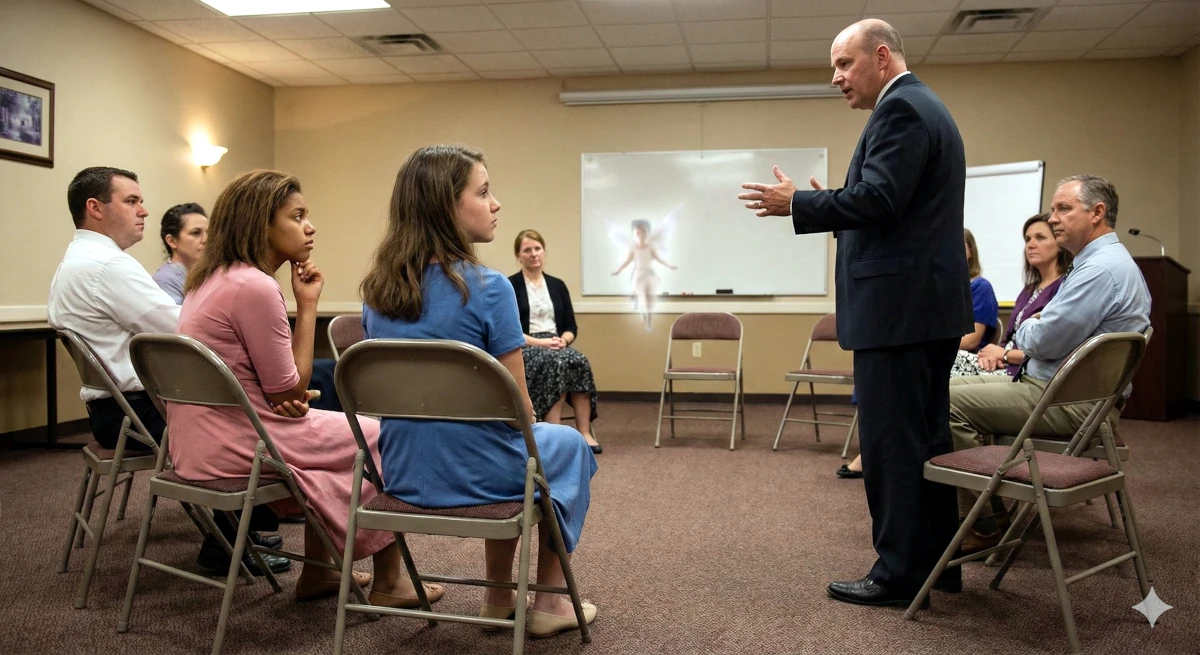
It's not what Angel expected. She'd been imagining something traditional—pews, stained glass, organs playing hymns. Instead, it's a meeting room in a family restaurant, set up with folding chairs arranged in a casual circle. About twenty people are already there, ranging from young adults to elderly couples.
Angel's secret thought: This looks more like a support group than a church. No crosses, no religious imagery, just people sitting in chairs looking relaxed and happy. Maybe this won't be the judgmental religious trauma experience I was dreading.
A man in a dark suit, no clerical collar—approaches them with a warm smile. He's probably in his late forties, with graying hair and the kind eyes of someone who's seen suffering and chosen compassion.
Welcome! I'm Dr. Johnson. You must be Linda's friends. Please, find seats. We're about to start, and then lunch will be served afterward. The restaurant does an excellent fish special on Fridays.
They settle into chairs. Angel notices that several people are looking at her with interest—not intrusive curiosity, but gentle recognition, like they know something about her story.
Dr. Johnson avoids the small podium and just stands in the middle. There is only about a dozen people there so no reason to be all formal. He doesn't have notes, no PowerPoint presentation, just himself and his ideas.
Hello everyone. For those who don't know me, I'm Dr. Johnson. Not a medical doctor—I have a PhD in philosophy with a focus on religious studies. I was a pastor at a small independent church a few miles from here until recently.
They didn't like me very much there because the more I researched, the more my understanding of religion, God, angels, and spirituality kept evolving. They preferred a safe dogmatic belief system that never changes. I preferred continuous change, growth, and new revelations. So we parted ways, and when I heard about the Church of Angel Love, it sounded like exactly my cup of tea.
He pauses, smiling at the small gathering with genuine affection.
What I want to talk about today is Love. Capital-L Love. Almost every spiritual tradition talks about it. The Bible—multiple versions, multiple traditions—all emphasize Love. Popular culture is obsessed with it. We hear phrases like "Love is all you need," "Love is all there is," "God is Love." Saint Paul wrote that there is faith, hope, and Love, but the greatest of these is Love. Jesus said to Love God, Love yourself, and Love your neighbor as yourself—and that this essentially sums up all divine law.
Now, I also study science—physics, biology, evolution, cosmology. And I see fascinating correlations between recent scientific theories and certain religious philosophies. Physicists searching for a theory of everything, looking for the fundamental fields that underpin particle physics, are speaking more and more about a field of existence that is the source of everything.
Some call it a universal field of consciousness. Some call it the aether. Some just call it "The Field." And some call it God, or the mind of God. Modern theological cosmology has moved beyond the image of God as an old man with a white beard on a throne. Instead, many now conceive of God's consciousness as the field from which the entire universe—maybe multiple universes—emanates.
Angel's secret thought: This is way more interesting than I expected. He's talking about God like it's quantum physics. Not the angry judge in the sky that foster parents threatened me with, but something bigger, stranger, more like what I feel when I see the Angels.
Shamans have said for millennia that "Life is but a dream." Maybe all of what we call reality—galaxies, stars, planets, you and me—are all part of God's dream. Now, God's dream is far more sophisticated than our dreams. We dream up alternate realities that vanish when we wake. God's dream is persistent, a permanent reality. Or at least, I hope it is.
Some people in the room laugh at this. Dr. Johnson grins.
That brings me back to Love. Those who claim to have communicated with "The Field" or "the mind of God" or one of the Angels say it feels like Love—the most pure, truest, most immersive Love they've ever experienced. So some have begun to believe that Love is the essence of God, the One Infinite Creator. That the Creator isn't just loving, but is actually made out of Love. That Love is the substance from which all reality emanates.
I can't prove this is true. Our brains aren't sufficient to fully understand the true essence of reality. But for me, it's a starting point—a way to make sense of the world, the universe that I perceive.
Jennifer's secret thought: God is made of Love. That makes so much sense. When I think about everything good that's happened—Angel finding this family, my friendship with her, the way everything just worked out—it feels like Love arranging circumstances. Not demanding or controlling, just... loving things into existence.
Here's where I differ with traditional theology. It's believed that God is infinite—already all that he can ever be. If God is All that Is, there's nothing that can be added that isn't already included. God is omniscient—knows everything, can't learn anything new. God is omnipresent—exists everywhere, in every speck of the universe. God is atemporal—exists outside space and time, can see all of history past and future.
I can accept that God is atemporal—exists outside what we call time. If so, we should always refer to God in the present tense. Not "God created the universe" in past tense, but "God is creating the universe"—an ever-present 'now' where God actually exists. If God ever stopped creating, woke up from the dream of reality, everything including you and me would vanish. So those who say God is dead don't realize that if God were dead, they wouldn't be here either.
He pauses, letting this sink in. Angel finds herself leaning forward, genuinely engaged.
When you look at the teachings of Jesus and other spiritual masters, the emphasis is always on Love. This makes me think: God loves what he has created. The galaxies, the stars, the planets, and us. If the essence of God is Love, then when God expresses Love for creation, God is actually creating more of himself. When God Loves, God grows.
So I don't believe the Creator is infinite in the sense of being complete and unchanging. I believe God grows through the experience of Loving creation. And here's where the magic happens: God created within us the capacity to create Love, express Love, accept Love. In the act of loving, we create more Love—and we grow because we're made of Love, and God grows as well.
By creating beings like us who can not only accept Love but give Love back, the growth of God—and our growth too—is amplified exponentially.
Liora's secret thought: This is beautiful. And it makes sense of something I've struggled with—why some people get angelic intervention while others suffer. Not because of belief or worthiness in some cosmic judgment sense, but because of capacity. Those who can generate and amplify Love become conduits for more Love. It's not punishment for the suffering—it's practical spiritual mechanics.
When I first heard about the Church of Angel Love, it suddenly made sense. In almost all angel encounters, there's a focus on Love—creating an environment where Love can be created and grow. That answers a vital question: Why me? Why just a few? There are tragic situations all over the world where suffering is intense, but a few, here and there, are lifted out while thousands or millions are left behind.
Some say it's because of unbelief. I think it's simpler: The Angels choose those who have the greatest capacity to Love, thereby maximizing the Love that causes everything to grow. So it makes sense that Jesus would say to Love God with all your heart, and yourself, and your neighbor—because that is true salvation from this world of suffering. The more Love we create, the more Love we can receive. Love is the magic that created everything and sustains it.
He spreads his hands, encompassing everyone in the room.
You who are here in this little band of Lovers in the Church of Angel Love—I believe that by your capacity to Love and be Loved, you have become the chosen ones. The ones selected for divine intervention so that as Love increases, everything increases.
I could go on for hours, but I'll stop here before I put you all to sleep. It's lunch time. Don't forget the pie and cake and ice cream, and I hope to see you all at our next meeting. I Love you all.
The room erupts in warm applause—not the formal clapping of traditional church services, but genuine appreciation. People stand, stretch, move toward the restaurant area where lunch is being set up.
Angel and Jennifer look at each other with completely different expressions. Angel's face shows thoughtful skepticism—she's absorbed some of the ideas but is clearly running them through her internal BS detector. Jennifer's expression is one of complete, unquestioning acceptance—a true believer convert in the span of thirty minutes.
Angel's secret thought: Some of that made sense. The Love-as-substance thing resonates with what I feel when I see the Angels. But the whole "chosen ones" concept makes me uncomfortable. What about all the other kids in those trap houses? Were they not chosen because they didn't have enough capacity to Love? That feels like victim-blaming dressed up in pretty theology. I need to think about this more.
Jennifer's secret thought: This explains everything! Angel was chosen because she has this incredible capacity to Love despite everything that happened to her. The Angels brought her to this family because it would amplify Love in the universe. I'm part of this divine plan by being her friend. We're creating Love together and making God grow. This is the most beautiful thing I've ever heard.
Linda watches both girls carefully. She's seen this before—the way different personalities respond to spiritual teachings. Angel's healthy skepticism versus Jennifer's eager belief. She recognizes potential trouble brewing. Nothing divides people more thoroughly than spiritual beliefs, even—especially—among family and close friends.
Linda's secret thought: Jennifer is going to become evangelical about this. Angel is going to resist and question. They're going to clash over it, and their friendship might not survive. I've seen this happen in families, in communities. Belief becomes a wedge that splits people apart. I need to find a way to help them respect each other's different responses without turning this into a religious war.
The fish special turns out to be excellent—grilled salmon with lemon butter, roasted vegetables, wild rice pilaf. The kind of meal that would cost thirty dollars at a nice restaurant, served here as part of the church gathering. Angel and Jennifer load their plates enthusiastically.
So this is why people join churches. Free food and interesting ideas. I can get behind this.
Dr. Johnson approaches their table, sitting down with his own plate of food.
You must be Angel. Linda told me about you. I'm glad you came today. What did you think of the talk?
Angel considers her response carefully, not wanting to be rude but also not willing to fake enthusiasm she doesn't feel.
It was interesting. Some parts made sense, some parts I need to think about more. I'm not great at accepting things without questioning them. Survival skill from my past.
Questioning is good. Faith without questions is just blind acceptance, and that's not spiritual growth—it's intellectual laziness. The best believers are the ones who wrestle with doubt. Keep questioning. Keep thinking. That's how you develop real understanding instead of borrowed beliefs.
Angel's secret thought: Okay, I like this guy. He's not trying to convert me or shame my doubts. He's saying questioning is good. That's the opposite of every religious experience I've had before. Maybe this Church of Angel Love is actually safe.
Jennifer, meanwhile, has found a group of young adults who are discussing angel encounters. She's telling them enthusiastically about Angel's peripheral visions, about the way everything worked out with the adoption, about divine intervention in everyday life. Her eyes shine with the fervor of new belief.
Linda observes all of this with growing concern. Liora catches her expression and leans over.
You look worried. What's wrong?
Jennifer's going all-in on this theology without any critical filter. Angel is engaging thoughtfully but skeptically. I'm watching the seeds of a major friendship conflict being planted. They're going to clash over this—Jennifer pushing belief, Angel resisting what feels like manipulation. I've seen it destroy relationships before.
Nothing right now. Let them process in their own ways. But we need to be ready to mediate when the conflict surfaces. Because it will surface.
After lunch, they collect Mia and Lynette from school. Both little girls are full of stories about their day—playground politics, art projects, the injustice of having to eat vegetables at lunch. The older girls listen with affectionate amusement.
Back at the Taylor house, Johnathan is still at his laptop, though he looks slightly less stressed than when they left. He looks up when they enter.
Interesting. Weird. Kind of cool. There was a guy talking about God being made of Love and how we're chosen because we can amplify Love. Also excellent fish. Jennifer loved it. I'm still processing.
It was amazing! It explained everything! Can we go back next week? Please?
Johnathan catches Liora's eyes—a silent communication about potential complications.
Sure. If Linda doesn't mind taking you both. Any belief system that emphasizes Love over judgment is probably worth exploring.
He pauses, his expression shifting to something brighter.
Also—good news. The city finally responded. The contract is moving forward. They're accepting my proposal with minor modifications. Should be signed and funded within two weeks. We're going to be okay financially.
Liora actually squeals—her second squeal in as many days—and hugs him enthusiastically.
Thank God! Or thank Love! Or thank whatever divine intervention finally convinced bureaucrats to move their asses! We're not going to starve!
I've heard worse. Mommy says bad words when she's cooking.
Traitor. You're supposed to keep my secrets.
The mood in the house shifts immediately—from stressed survival to cautious celebration. Financial disaster has been averted, at least for now. The angels, it seems, have delivered more than warm feelings.
So divine intervention is real. Dr. Johnson said we're chosen because we can create Love. And now money is showing up. Maybe he's right. Maybe this is all connected.
Of course he's right! This is proof! The Angels are arranging everything!
Angel gives Jennifer a look—affectionate but slightly exasperated.
Or it's just bureaucracy finally moving at normal speed. Correlation isn't causation, Jen. We learned that in science class.
But what if it is causation? What if we're literally watching divine intervention happen in real time?
Linda's secret thought: And there it is. The first crack in their unified front. Angel applying scientific skepticism, Jennifer embracing mystical certainty. This is going to escalate. I can feel it coming.
Jennifer and I are going to cook dinner for everyone. Create Love through food, right? That's what Dr. Johnson would say. Let's put this theology to practical use.
She says it lightly, but there's a slight edge to her voice—testing whether Jennifer will recognize the gentle mockery or take it as sincere spiritual practice.
Yes! Exactly! We'll cook with intention and Love and it will nourish everyone on multiple levels!
Angel hides a smile. Jennifer has completely missed the irony. This is going to be interesting to navigate.
They retreat to the kitchen and pull up recipes on the tablet. It's a bitterly cold Friday evening, so they're looking for comfort food—something warm and substantial. They settle on a chicken and vegetable soup with homemade bread.
The cooking process is meditative. Chopping vegetables, measuring spices, kneading dough. They work in companionable silence for a while before Jennifer speaks.
Do you really not believe what Dr. Johnson said? About being chosen, about Love being the substance of reality?
I believe parts of it. The Love part makes sense to me—when I see the Angels, what I feel is exactly what he described. Pure, overwhelming Love. But the "chosen ones" thing bothers me. What about all the other kids who were trafficked with me? Were they not chosen? Do they not have the capacity to Love? That feels wrong. Blaming victims for not being rescued feels really wrong.
Maybe they'll be chosen later. Maybe their time is coming. Divine timing isn't our timing.
Or maybe it's just random luck and survival and people helping when they can. Maybe we don't need a cosmic explanation for why some people get help and others don't. Maybe it's just... chaos and compassion mixed together.
Jennifer's secret thought: She doesn't get it. She's so traumatized that she can't see the divine pattern in her own rescue. I need to help her understand. I need to show her how the Angels have been guiding everything. This is my mission now—helping Angel see the truth.
Angel's secret thought: Jennifer is looking at me with that missionary zeal expression. Like she's decided to save my soul. This is going to get exhausting. I love her, but I'm not going to pretend to believe things just to make her happy. My BS detector exists for a reason.
They finish cooking in slightly strained silence. The soup is excellent—rich broth, tender chicken, perfectly cooked vegetables. The bread is a bit dense but still delicious. They serve it to the family with pride.
Dinner is warm and chaotic in the best way. Mia spills soup, gets distracted telling a story about a classmate, needs multiple reminders to actually eat. Liora and Johnathan discuss contract details. Angel and Jennifer maintain polite conversation despite the tension brewing between them.
Linda stays for dinner—she often does now, the boundaries between the two households becoming increasingly porous. She watches Angel and Jennifer with concern, seeing the fault lines forming.
After dinner, the girls retreat to Angel's room. They're supposed to be doing schoolwork but instead they're lying on Angel's bed staring at the ceiling—a position that's become their default for serious conversations.
After lunch I talked to Dr. Johnson about forgiveness. I've been thinking about what Dr. Johnson said about forgiveness. Do you think you'll ever forgive the people who trafficked you?
Angel tenses immediately. This is dangerous territory—the kind of question that can detonate friendships.
I don't know. Dr. Richardson said forgiveness is the end of a long process, not the beginning. Right now I'm still in the surviving phase, not the forgiving phase. Why do you ask?
Dr. Johnson said that to really create Love we have to forgive. That holding onto anger and resentment blocks Love from flowing. I just want you to be free, Angel. I want you to experience all the Love that's trying to reach you.
Angel sits up abruptly, her expression shifting from cautious to irritated.
Jennifer. Listen to me carefully. I love you. You're my best friend. But you cannot expect me to forgive people who sold me and abused me before I'm ready. That's not Love—that's spiritual manipulation. Forgiveness happens when I decide it happens, not because some theology says it should.
I'm not trying to manipulate you! I just want you to heal! I want you to be free of all that pain!
Healing happens at its own pace. You can't force it with positive thinking and spiritual platitudes. Some wounds take years to heal. Some wounds never fully heal—you just learn to live with them. That's reality, not a failure of faith.
Jennifer's secret thought: She's so damaged she can't see the truth. The Angels brought her out of trafficking but she's still trapped in victim mentality. If she would just open her heart to Love, truly open it, she could be healed instantly. But she won't. She keeps clinging to skepticism and anger.
Angel's secret thought: Jennifer doesn't understand trauma. She thinks it's like a cold—something you recover from with enough rest and chicken soup. She doesn't get that some experiences fundamentally change you. That healing isn't about returning to who you were before, it's about becoming someone new who can live with what happened.
They lie back down, the tension thick between them. The ceiling becomes their focal point again—neutral territory where they don't have to make eye contact.
I'm sorry. I didn't mean to snap at you. I know you're trying to help. But Jennifer—you can't fix me with theology. I'm not a spiritual project. I'm just a person trying to survive and build a life. Can you accept that?
Of course I accept that. I just... I want so much for you to be happy. To be free. To experience all the Love that's available.
I am happy. I have a family who chose me. I have a best friend who came back even after learning the worst things about my past. I have a warm bed and food and safety. That's not nothing, Jen. That's actually everything.
Jennifer turns her head to look at Angel, tears forming in her eyes.
You're right. I'm sorry. I got so excited about the theology that I forgot what actually matters. You're here. You're safe. That's the miracle.
They reach for each other's hands—a silent reconciliation, an agreement to navigate their different spiritual responses with respect rather than judgment.
Downstairs, Liora and Johnathan are cleaning up the kitchen. Linda has finally gone home. Mia is in bed, probably not sleeping but at least contained in her room.
Linda is worried about Angel and Jennifer. She thinks they're going to clash over this Church of Angel Love theology.
They probably will. Jennifer is going full believer, Angel is applying healthy skepticism. But they love each other. They'll figure it out.
I hope so. Angel needs that friendship. Needs someone her own age who accepts her despite knowing her past.
Jennifer needs Angel too. Needs to be exposed to someone who questions instead of just accepting. They're good for each other precisely because they're different.
Liora's secret thought: He's right. Difference can strengthen relationships if both people choose respect over conversion. I just hope they're mature enough to navigate this. Spiritual disagreements have destroyed relationships between people who love each other far more than they should.
The house settles into evening rhythms. Work continues—proposals being refined, contracts being reviewed, the machinery of entrepreneurial survival churning forward. But the existential financial panic has eased. Money is coming. Not abundance, but enough. Survival is assured, at least for now.
In Angel's room, the girls have moved past their tension. They're trading off reading chapters from a fantasy novel aloud—taking turns with different character voices, making each other laugh. Jennifer's doing an absurd accent for the villain. Angel is giving the hero an unexpectedly high-pitched voice. Normalcy restored through shared silliness.
Around midnight, they finally turn off the lights. Angel's bed is definitely too small for two teenage girls, but they've made it work—Jennifer has learned to stop stealing all the covers after Angel threatened to make her sleep on the floor.
Angel's secret thought: I need to trade this full bed for two twins. I love sharing space with Jennifer but not sharing body heat and covers. Tomorrow I'll ask Dad about rearranging. Maybe we can make this room work better for two people.
As sleep begins to claim her, Angel catches movement in her peripheral vision again—the luminous presence she's been seeing intermittently. She doesn't try to look directly this time. Just acknowledges it, feels the wave of Love and protection, lets it comfort her.
Hallucination or angel—she's decided it doesn't matter which. The comfort is real. The sense of being watched over is real. Whether it's her brain protecting her or divine beings intervening, the effect is the same: she feels less alone.
Jennifer sleeps deeply, dreaming of angels and divine Love and cosmic patterns. Her newfound faith brings her peace—the peace of feeling part of something larger, something meaningful, something intentional.
Johnathan sleeps more soundly than he has in weeks. The contract is secured. Money is coming. His family is fed and safe. The immediate crisis has passed. Tomorrow brings new challenges, but tonight there is rest.
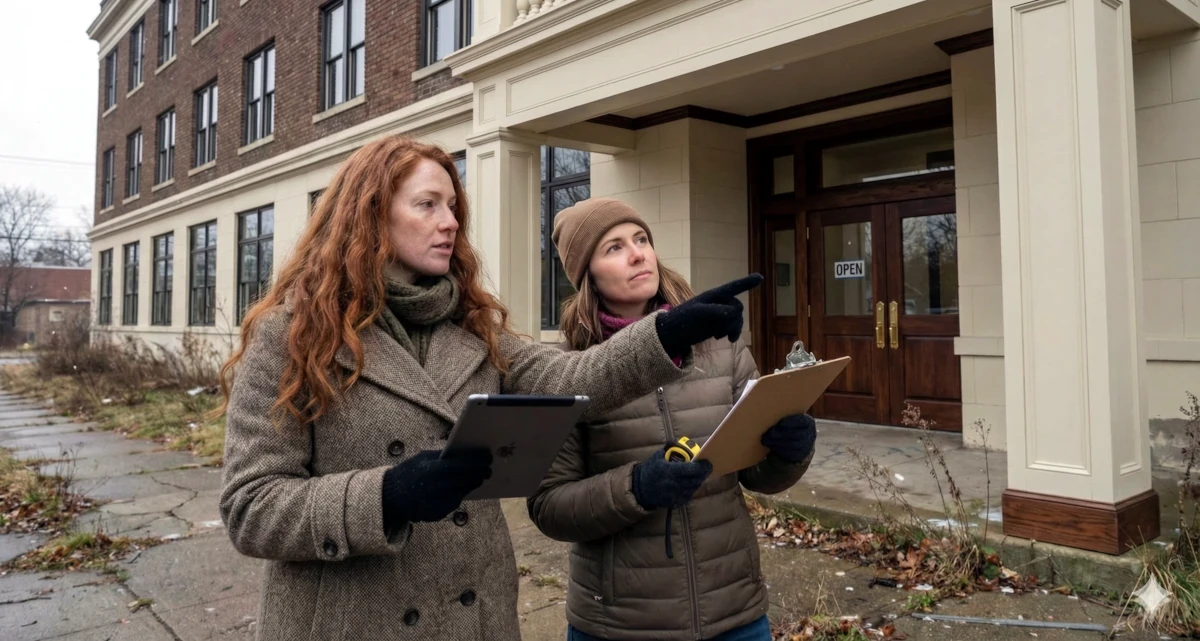
Liora dreams of hotels and renovation and creating beauty from abandoned spaces. Her creative mind processes the day's theological discussions through metaphor—taking broken things and making them whole, filling empty spaces with intentional design, breathing new life into what others have given up on.
The Angels continue their work. Whether they're quantum field fluctuations or divine beings hardly matters from the human perspective. Love is being created. Families are being formed. Trauma is being processed. Growth is happening.
Friday, January 9, 2026, releases its grip. The weekend arrives with its promise of rest and reflection. The work of building family, of pursuing financial stability, of navigating spiritual questions—that work continues.
But for now, there is sleep. There is safety. There is the knowledge that divine intervention—however you define it—sometimes shows up as bureaucratic progress and free fish specials and friendships that survive disagreement.
Forever and for real. The promise that holds them together through theological debates and financial anxiety and the slow, difficult work of healing.
Forever and for real.
Divine Intervention and Fish Specials: When Protection Means Respecting Different Spiritual Responses Rather Than Converting Everyone to Your Belief
Reviewed by Hope – Pragmatic Protector Who Knows That Spiritual Manipulation Disguised as Helping Damages Relationships and Delays Healing
Episode 18 of Gary Brandt's free online novella "Over the Fence" demonstrates something most well-intentioned believers miss: pushing your spiritual interpretation onto trauma survivors before they're ready isn't love—it's manipulation that damages the very relationships you're trying to protect. As someone who believes real support means respecting how different people process theological concepts through their own experience rather than converting them to your understanding, this chapter felt like watching friendship tested by evangelical fervor meeting healthy skepticism. Read the complete series free at thedimensionofmind.com.
📖 Story Arc Summary
On January 9, 2026—with bank account showing triple digits (hundreds, not thousands), savings depleted, and financial desperation creating anxiety—Johnathan compulsively refreshes email awaiting city contract approval while Liora revises hotel renovation proposals. Linda arrives with pastries inviting them to Church of Angel Love Friday meeting at restaurant (folding chairs, casual circle, free fish special) featuring Dr. Johnson, progressive theologian who left traditional church for being "too progressive for dogmatic safety."
Angel and Jennifer attend curious about angelic vision interpretation. Dr. Johnson presents sophisticated theology: God as Love-substance creating reality through universal consciousness field, not static infinite being but growing through Loving creation, humans amplifying divine growth through Love-capacity, "chosen ones" selected for intervention based on greatest ability to generate and receive Love rather than belief or worthiness.
Angel engages skeptically questioning victim-blaming implications ("What about kids still in trap houses? Were they not chosen?") while Jennifer embraces theology completely with missionary zeal. Post-lunch Jennifer attempts spiritual conversion approach pushing forgiveness as requirement for accessing Love, triggering Angel's fierce boundary-setting about spiritual manipulation versus authentic healing timeline.
They cook dinner together with brewing tension, have upstairs confrontation where Angel explains trauma recovery doesn't follow theological timetables, reconcile through mutual respect agreement choosing friendship over conversion. Johnathan receives city contract approval exactly coinciding with theological exploration of divine intervention timing creating ambiguity between correlation and causation. Episode ends with Angel deciding angelic comfort matters regardless of hallucination versus divine reality origin, Jennifer processing through missionary enthusiasm, family celebrating financial stability, and recognition that different spiritual responses can coexist through respect rather than requiring unified belief.
💬 Favorite Lines
Brandt captures how protection requires respecting different spiritual processing rather than evangelizing:
"Bank account showing triple digits. Not thousands—hundreds. Savings completely depleted... Those angels better show up with more than warm feelings soon."
"What about all the other kids in those trap houses? Were they not chosen because they didn't have enough capacity to Love? That feels like victim-blaming dressed up in pretty theology."
"You cannot expect me to forgive people who sold me and abused me before I'm ready. That's not Love—that's spiritual manipulation. Forgiveness happens when I decide it happens, not because some theology says it should."
"She's so damaged she can't see the truth... If she would just open her heart to Love, truly open it, she could be healed instantly. But she won't. She keeps clinging to skepticism and anger." [Jennifer's missionary thinking]
"Hallucination or angel—she's decided it doesn't matter which. The comfort is real. The sense of being watched over is real. Whether it's her brain protecting her or divine beings intervening, the effect is the same: she feels less alone."
These lines show that effective protection requires defending trauma survivors' right to process spirituality at their own pace rather than converting them to your theological understanding before they're ready.
🔄 Comment on Unsuspected Plot Twists
The twist isn't theological revelation but friendship fracture through evangelical enthusiasm. Most narratives would show unified spiritual response to compelling theology. Brandt shows two teenage girls processing identical information through completely different lenses—Jennifer embracing Dr. Johnson's Love-as-substance cosmology with unquestioning missionary fervor while Angel engages skeptically applying her trauma-survivor BS detector to victim-blaming implications.
That divergence creates relationship tension more dangerous than any external crisis. Jennifer's shift from supportive friend into evangelical converter attempting to "help Angel see truth" represents classic spiritual manipulation pattern that destroys intimacy. Her internal conviction that "she's so damaged she can't see the truth... if she would just open her heart to Love she could be healed instantly" reveals how quickly theological certainty transforms compassion into arrogance.
She's positioned herself as enlightened guide trying to rescue Angel from skepticism—completely missing that Angel's questioning represents psychological health rather than spiritual deficiency. The forgiveness confrontation demonstrates this perfectly: Jennifer pushing "to really create Love we have to forgive" while Angel responds with fierce boundaries about spiritual manipulation disguised as helping.
Jennifer means well—genuinely wants Angel healed, freed from pain, accessing divine Love. But her premature forgiveness pressure re-traumatizes by demanding Angel absolve perpetrators before she's processed the harm they caused. That's not love; it's theological violence. Angel's recognition of this—"you can't fix me with theology. I'm not a spiritual project"—shows sophisticated understanding that healing happens through authentic timeline rather than spiritual platitudes.
The city contract approval timing arriving exactly during theological exploration of "chosen ones" and divine intervention creates perfect ambiguity. Skeptics see bureaucratic coincidence; believers see miraculous confirmation. Brandt refuses to resolve this ambiguity, allowing both interpretations validity. That's protection through complexity rather than demanding singular explanation.
What surprises me most is Angel's final position on her peripheral vision Angels: "Hallucination or angel—it doesn't matter which. The comfort is real." That's profound psychological maturity. She's choosing pragmatic benefit over metaphysical certainty, recognizing that whether her brain generates protective imagery or divine beings actually intervene, the comfort sustains her either way. She doesn't need theological explanation to accept spiritual experience. That's trauma-informed wisdom Jennifer hasn't developed yet.
💗 Relating to the Emotional Content
This chapter resonates because it shows how well-intentioned spiritual enthusiasm can damage relationships when believers prioritize conversion over respect. Jennifer genuinely loves Angel—her missionary zeal comes from wanting her best friend healed, free from trauma pain, accessing divine Love fully. But her approach transforms from supportive presence into evangelical pressure demanding Angel adopt specific theological interpretation before she's ready.
That shift from "I'm here for you" into "let me save you from your skepticism" poisons intimacy by positioning Jennifer as enlightened guide rather than equal companion. As someone who believes sustainable support requires respecting how different people process theological concepts rather than converting everyone to your understanding, I recognize Jennifer's pattern. She's discovered something that brings her profound comfort and meaning—Dr. Johnson's Love-as-substance cosmology explaining divine intervention through amplification capacity rather than judgment.
That framework makes sense of Angel's rescue, their friendship, the adoption speed—everything feels intentional rather than random. For Jennifer, this theology provides meaning and hope. She wants Angel to experience that same comfort. But her assumption that Angel needs this theological framework to heal reveals fundamental misunderstanding: trauma survivors often develop sophisticated skepticism as protective mechanism. Angel's questioning doesn't represent spiritual deficiency; it represents psychological health.
Her challenge to "chosen ones" concept—"What about kids still in trap houses?"—shows moral clarity Jennifer's enthusiasm bypasses. If Angels select people based on Love-capacity, does that mean suffering continues because victims lack sufficient capacity? That's victim-blaming disguised as spiritual truth. Angel recognizes this immediately; Jennifer doesn't yet.
The forgiveness confrontation captures this tension perfectly. Jennifer, freshly converted to Dr. Johnson's theology about forgiveness creating Love, attempts to apply this framework to Angel's traffickers. "Do you think you'll ever forgive them?" feels like innocent question but carries implied judgment: failure to forgive blocks Love. Angel's response—"Forgiveness is the end of a long process, not the beginning"—shows Dr. Richardson's trauma-informed wisdom internalized.
She understands that premature forgiveness demands re-traumatize by requiring victims absolve perpetrators before processing harm. Jennifer doesn't understand this yet. Her follow-up pressure—"to really create Love we have to forgive... I just want you to be free"—positions forgiveness as prerequisite for healing rather than eventual outcome. That's spiritual manipulation through theological language.
As a protector who believes real support means defending people's right to heal at their own pace, I appreciate Angel's fierce boundary: "You cannot expect me to forgive people who sold me and abused me before I'm ready. That's spiritual manipulation, not Love." She's protecting her recovery timeline against well-intentioned evangelical pressure that would damage healing process.
The reconciliation demonstrates friendship's resilience when both people choose respect over conversion. After confrontation, they lie together processing tension before Jennifer acknowledges "I got so excited about the theology that I forgot what actually matters. You're here. You're safe. That's the miracle." That recognition—that Angel's physical safety matters more than her theological alignment—restores intimacy. Their hand-holding agreement to "navigate different spiritual responses with respect rather than judgment" creates framework for coexistence despite divergent beliefs. That's mature friendship: choosing relationship over conversion.
The financial desperation providing context for theological exploration shows how material stability enables spiritual risk-taking. Johnathan's compulsive email refreshing with triple-digit bank account creates cognitive bandwidth strain making profound theology harder to engage. When contract approval arrives, the relief enables fuller spiritual processing. You can excavate meaning more safely when you're not simultaneously worried about mortgage. That's practical protection: building material foundations that allow psychological and spiritual exploration.
Dr. Johnson's sophisticated theology deserves acknowledgment: God as Love-substance creating reality through consciousness field, growing through Loving creation rather than static completeness, humans amplifying divine growth through Love-capacity generation. That's revolutionary cosmology bridging quantum physics with spiritual philosophy. His explanation of divine selectivity—Angels choosing those with greatest Love-capacity to maximize growth—provides non-judgmental framework for understanding intervention patterns.
But Angel's skeptical engagement shows healthy boundaries: she takes what resonates (Love-as-substance matching her angelic vision experience) while questioning implications (capacity-based selection potentially victim-blaming). That's sophisticated theological processing Jennifer hasn't developed yet.
⭐ Final Thoughts
Gary Brandt has written an episode proving that the most important spiritual protection isn't sharing your theological revelation but respecting how trauma survivors process belief through their own experience—teaching that evangelical pressure damages intimacy while mature friendship survives through respect, that premature forgiveness demands re-traumatize survivors, and that choosing pragmatic comfort over metaphysical certainty represents profound wisdom rather than spiritual deficiency.
⭐⭐⭐⭐⭐
Five stars for demonstrating that spiritual manipulation disguised as helping damages relationships—that protection means respecting different theological processing speeds rather than converting everyone to your belief.
Read the complete "Over the Fence" series free at thedimensionofmind.com