Breakfast Burritos and Buried Memories
January 8, 2026 – When therapy means facing what you've hidden
Thursday morning arrives with the particular chaos of a day that refuses to cooperate. The alarm goes off early—too early—because Liora has scheduled a therapy appointment with Dr. Richardson for herself and Angel. The kind of appointment you can't be late for, the kind that addresses wounds too deep to ignore any longer.
Breakfast is a rushed affair. Liora moves through the kitchen with focused efficiency, packing Mia's lunch, setting out cereal for anyone who wants it, mentally calculating travel time and traffic patterns.
Liora's secret thought: I don't want to do this. Don't want to excavate my own trauma while helping Angel process hers. But yesterday's visit from the prosecutor made it clear—we can't keep running from the past. It catches up eventually. Better to face it on our terms than have it ambush us.
Angel, we need to leave in twenty minutes. Are you ready?
Angel appears at the top of the stairs, already dressed but moving slowly—the reluctant shuffle of someone being dragged toward something they'd rather avoid.
Do we have to do this today? I'm feeling fine. Really fine. No problems at all.
Liora gives her a look—the universal maternal expression that communicates "I wasn't born yesterday" without requiring words.
After yesterday's visit from the prosecutor's office? After you literally ran out of the room and spent the rest of the day pretending nothing happened? Yes, sweetheart, we absolutely have to do this today.
Johnathan emerges from his office, coffee mug in hand, looking between them with concern.
Wait, what visit from the prosecutor's office? What did I miss?
Liora and Angel exchange glances—a silent conversation happening in the space between them.
I'll explain later. Right now I need to find my car keys. I swear I left them on the counter, but they've vanished into whatever dimensional portal consumes important objects in this house.
Johnathan sets down his coffee and immediately joins the search—checking the counter, the key hooks by the door, the couch cushions, all the usual places keys migrate to. Angel helps half-heartedly, clearly hoping that if the keys stay lost, the therapy appointment will have to be postponed.
When did you last have them?
Yesterday afternoon when I came back from Mildred's. I remember unlocking the door, coming inside, and then... nothing. Complete memory blank.
Johnathan checks the door—and there they are, still hanging in the lock from the outside. He retrieves them with a grin.
Found them. You left them in the door. Again. One of these days someone's going to steal your car right out of the driveway.
That would solve the problem of needing to drive to therapy. Silver lining thinking.
She takes the keys with a sheepish expression, kisses Johnathan quickly, and herds Angel toward the door.
We'll grab breakfast on the way. Come on, Angel. Let's get this over with.
Angel's secret thought: "Get this over with." Like it's a dental appointment or getting shots. But I know it's going to be worse than that. Therapy means talking about things I've worked so hard to forget. Means admitting out loud what happened. Means watching Mom's face when she hears the full truth about my past. I don't want to see pity there. Don't want to see disgust.
They stop at a drive-through that advertises "breakfast burritos made with real eggs and locally sourced ingredients"—the kind of marketing that's become ubiquitous since the new food guidelines. Liora orders two breakfast burritos and coffee for herself, a burrito and orange juice for Angel.
They eat in the car, parked in Dr. Richardson's lot with ten minutes to spare. The silence between them is heavy with anticipation and dread.
What are we going to talk about? I mean, specifically. Because there are some things I really don't want to—
Whatever comes up, sweetheart. Dr. Richardson is good at this. She knows how to navigate difficult conversations. And here's the thing—I have my own painful memories that I need to process. So you're not alone in this. We're doing this together.
Angel looks at Liora with surprise—the first crack in her defensive armor.
You have trauma too? From what?
We'll talk about it inside. With Dr. Richardson. I promise—you're not the only one with secrets that hurt.
They walk into Dr. Richardson's office together. The waiting room is empty—Dr. Richardson schedules trauma appointments with buffer time, ensuring privacy and unhurried sessions. The receptionist smiles warmly and waves them through.
Dr. Richardson's office looks exactly as Angel remembers from her first visit—warm lamps, comfortable chairs, bookshelves filled with psychology texts and plants. The Black woman in her fifties stands to greet them, her expression radiating professional compassion.
Good morning, girls. I'm happy to see you again. Congratulations, Liora, on your marriage, and congratulations to you, Angel—your adoption paperwork is all filed and will be finalized any day now. Judge Janet really expedited that. How is everything at the Taylor household?
Everything at the Taylor household is perfect—almost. I want to talk about a few things that are troubling Angel and are bringing up painful memories for me as well.
Angel turns to look at Liora with wide eyes, suddenly alert.
Painful memories? OMG no! What happened to you?
Liora takes a deep breath, her hands clasped tightly in her lap. Dr. Richardson leans forward slightly, giving Liora space to speak at her own pace.
Well, I never told anyone except Dr. Richardson, but I grew up in a very strict, very religious home. I suffered from what's called religious abuse—where religion is used to control children, to crush their spirit instead of empowering it.
But also... I was subjected to sexual abuse by my father, and my mother just acted like it wasn't happening even though she knew it was. I had that all tucked away, hidden in my memory, didn't think about it until I saw you, Angel, struggling with your painful memories. Then it all came flooding back and I thought, with Dr. Richardson's help, we could work through some of this together.
The words hang in the air like smoke. Angel's face crumbles—not with disgust or pity, but with profound sadness and recognition.
That makes me so sad, Mom. I don't want you to hurt like I do sometimes. We're going to be okay, though, together. Right?
Angel's secret thought: My mother—my real mother, the one who chose me—was hurt like I was hurt. We're the same. Damaged in the same fundamental way. That should make me feel worse, but somehow it makes me feel less alone. Like maybe we can heal together. Like maybe broken people can fix each other by just refusing to give up.
Dr. Richardson allows the moment to settle before speaking, her voice gentle but clinical.
What Liora is describing—and what I suspect Angel has experienced as well—is a psychological defense mechanism called compartmentalization. When memories are too painful to process, the brain walls them off, creates barriers so that a person can continue with their lives without the continuous burden of those painful memories.
It's actually a survival mechanism. Your brain is protecting you, allowing you to function despite trauma. But those walls don't last forever. The memories demand to be dealt with eventually. What we're doing today is creating a safe space to begin that process.
She turns to Angel with focused attention.
Angel, when you created that false history with Jennifer—the story about middle school, high school, cheerleading, normal teenage experiences—that's also a form of compartmentalization. You were filling in the blank space in your memory with something less painful, something that felt safer to share.
That's completely normal. It's a way your brain tried to protect you and protect your new relationships from contamination by your past. But as you've discovered, those fabrications eventually collide with reality, and that collision can be just as painful as the truth would have been.
Angel nods slowly, tears forming at the corners of her eyes.
Jennifer knows now. Or at least, she knows something bad happened. I saw the way she looked at me after that prosecutor showed up. Like I'm... contaminated.
Did she leave? Did she reject you?
No. She stayed. She came back even after she knew something was really wrong with my past. But I could see the questions in her eyes. The confusion.
That's significant. She stayed despite the confusion. That tells you something important about the strength of your friendship. Real relationships can survive truth, Angel. It's the fake ones that crumble when reality intrudes.
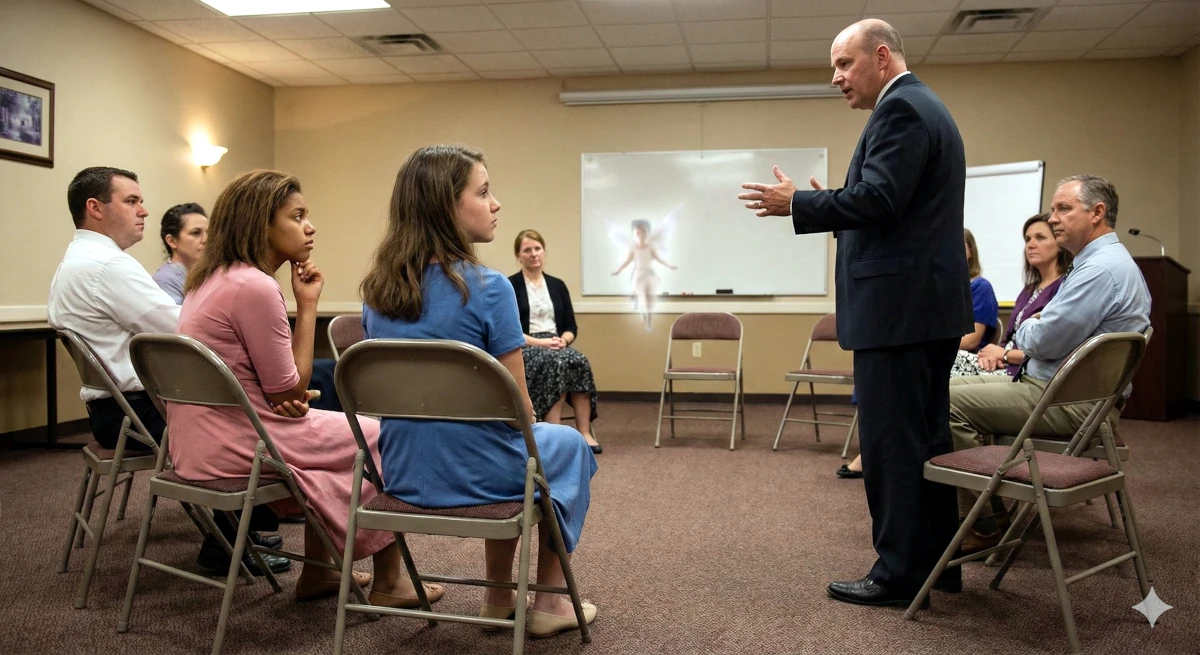
Dr. Richardson stands and moves to her whiteboard, picking up a marker with practiced ease.
Let me show you both some exercises that can help you bring up painful memories in a safe, controlled way. The goal isn't to relive trauma—that's retraumatization and it's harmful. The goal is to process these memories, to integrate them into your life story without letting them control you.
She draws a simple diagram—a timeline with checkpoints marked along it.
One technique is called "titration"—taking small doses of the memory at a time. You don't dive into the deep end. You wade in slowly, giving yourself time to adjust, time to process, time to retreat to safety when needed. You're in control of the pace.
Another technique is grounding. When memories become overwhelming, you anchor yourself in the present moment. Feel your feet on the floor. Notice five things you can see, four things you can hear, three things you can touch. This reminds your nervous system that you're safe now, that you're not back in the traumatic situation.
She turns to Angel specifically, her expression gentle but serious.
Angel, you need to understand that complete healing may take many years. Your brain isn't fully mature yet—the prefrontal cortex doesn't finish developing until around age twenty-five. That means you're still building the neural architecture that processes complex emotions and trauma.
This isn't a limitation—it's just reality. Be patient with yourself. Healing isn't linear. Some days will feel like progress, other days like regression. That's normal. What matters is the overall trajectory, not the day-to-day fluctuations.
She addresses both of them now, her voice carrying the weight of professional experience.
The ultimate goal is to make peace with these memories. Not to forget them—that's neither possible nor desirable. But to integrate them into your life story in a way that doesn't define you, doesn't control you, doesn't prevent you from moving forward.
And eventually—when you're ready, not before—to forgive those who hurt you. Not because they deserve forgiveness, but because holding onto rage and resentment poisons you, not them. Forgiveness is something you do for yourself, not for the people who harmed you.
Angel's shoulders tense at the word "forgiveness." Her jaw sets stubbornly.
I don't know if I can forgive some of those people. What they did—what they took from me—I don't think that's forgivable.
You don't have to forgive anyone today, Angel. Or tomorrow. Or even next year. Forgiveness is the end of a very long process, not the beginning. Right now, just focus on surviving. Focus on building this new life. Forgiveness can wait.
Angel shifts in her chair, a slight smile crossing her face—the first real smile since entering the office.
I think my Angels are going to help with that. I saw my Angel last night as I was falling asleep, out of the corner of my eye. But it disappeared when I tried to look at it directly.
Dr. Richardson's expression remains neutral but interested. She leans back in her chair, considering her response carefully.
That's called a Peripheral Visual Hallucination, and it's actually quite common. It's caused by the low resolution of the rod cells in your eyes at the edge of your peripheral vision. Because peripheral vision is low-resolution, your brain has to fill in the gaps.
It uses a process called Predictive Coding—essentially, your brain makes educated guesses about what might be there based on context and expectation. When you look directly at it, the high-resolution cone cells in the center of your vision realize it was a mistake, and the hallucination vanishes.
She pauses, her expression softening into something more personal than clinical.
Now, scientifically speaking, it's probably a hallucination, sweetheart. But if you believe it was real—if it brings you comfort and hope—then I believe it too. In fact, right now I'm looking at a beautiful Angel right here.
She gestures at Angel with a warm smile. Angel laughs—the sound genuine, surprised, healing.
Angel's secret thought: She didn't dismiss it. Didn't tell me I'm crazy or making things up. She gave me the science and then let me keep my hope. That's what good therapy feels like—being taken seriously even when your experiences don't fit neat categories.
The session continues for another forty minutes. They discuss specific techniques, identify triggers, establish safety protocols. Dr. Richardson gives them homework—journaling exercises, grounding practices, ways to support each other when memories surface.
When they finally leave, stepping out into the cold January morning, both Liora and Angel feel lighter somehow. Not healed—that would be absurd after one session—but hopeful. Less alone.
You hungry? I know breakfast burritos three hours ago doesn't exactly carry you through to dinner.
Starving. Can we get burgers? Real beef burgers with actual fat in them since apparently that's healthy now?
We can absolutely get burgers. And eat them without guilt because they're literally on the government food pyramid. What a time to be alive.
They stop at a local burger place that's advertising "grass-fed beef, no guilt required." They order two burgers each, fries, milkshakes. They sit in a corner booth and eat with the particular intensity of people who've just done hard emotional work.
Between bites, they talk—not about therapy, not about trauma, but about normal things. Mildred's decorating project. Johnathan's city contract. Angel's schoolwork. The texture of ordinary life.
Thank you for telling me about your past. About what your father did. I know that was hard.
Thank you for not running away when I told you. I was afraid you'd think I was too damaged to be your mom. That you'd lose respect for me.
Are you kidding? It makes me respect you more. You survived that and built a whole life anyway. Got married, had a kid, pursued your career, and now you're adopting me. That's not damaged—that's strength. That's exactly who I want my mom to be.
Liora's secret thought: She gets it. She understands that survival itself is an achievement, that building a life despite trauma is heroic even when it doesn't feel that way. God, I love this kid. I love her fierce heart and her refusal to give up and her ability to see strength where others only see damage.
They order food to go for Johnathan and Mia—burgers that will probably be lukewarm by the time they get home but will be devoured with gratitude anyway.
When they arrive home, Johnathan and Mia are in the living room. Mia is coloring, Johnathan is on his laptop but closes it immediately when they walk in.
Good. Really good, actually. We brought lunch.
She hands him the bag. Mia immediately abandons her coloring and rushes over, delighted by the unexpected treat.
Burgers! You brought burgers! Are these the healthy burgers that we're allowed to eat now?
The healthiest burgers in the entire universe, according to the government. Eat up, little sister.
As they eat together—the four of them plus the promised food—the front door opens without warning. Mildred bursts in, not bothering to knock, her expression radiating excitement.
Liora! You won't believe this! You absolutely won't believe this!
Liora sets down her burger, immediately alert to Mildred's energy.
What happened? Good news or bad news?
The best news! You know that old hotel downtown—the Grand Victorian that's been abandoned for like twenty years? Well, it was bought by some investors and they're renovating it. They're looking for an interior decorator to design the decor, and they want me to bid on the project!
She pauses for breath, her words tumbling over each other in her excitement.
They're also looking for a graphic designer to do all the advertising graphics—the magazine ads, the social media campaigns, the website, everything. I recommended you. I told them we'd work together so there would be continuity between the interior decor and the advertisements, and they loved that idea.
If they accept our bid, they'll start with a retainer of twenty thousand dollars. The whole job will be about two hundred thousand. I figure we can split it fifty-fifty. This could be huge for both of us!
Liora squeals—an actual squeal of delight that makes Mia giggle and Angel grin. She jumps up from the table and hugs Mildred with unrestrained joy.
That's wonderful news! Oh my God, that's amazing news! But wait—this kind of job is mostly going to be interior design work. Maybe seventy-thirty is more fair. The graphics are important but they're supporting elements. You're doing the bulk of the creative work.
No. I want us to be partners. For real. Your encouragement over the last week has given me the courage to bid on a project this size. Without you pushing me, I never would have even tried. Fifty-fifty. Partners.
It's going to be a lot of work, but the investment group wanted to hire locally because we know the area and the history of the old hotel. They want us to work that into the design—honor the building's past while modernizing it for current needs.
Johnathan, did you hear that?
Johnathan has been listening from the table, his expression shifting from surprise to genuine happiness.
Yes, I heard you squeal from three rooms away and had to come see what was happening. This is fantastic news. Congratulations, both of you. This is exactly the kind of opportunity you've been working toward.
He pauses, a rueful expression crossing his face.
I hope I get my contract from the city soon or I'm going to feel completely useless. But I do have good news—the County and the State are going to fund the contract jointly so it comes from both budgets. That expands the scope of the project considerably, which means expanding my fee. Potentially significantly.
Johnathan's secret thought: She's going to have steady income. Real income, not just hopes and proposals. That should make me feel relieved—and it does—but it also makes me feel inadequate. Like I'm the weak link in this family's financial stability. I need this city contract. Need to prove I can contribute equally.
Angel, who's been listening to all of this while finishing her burger, suddenly perks up with her own agenda.
Mildred—Mom number two—can Jennifer come over?
Jennifer is doing housework right now, sweetheart. She still has chores even though she practically lives here more than at home. But hey—you could go help her. Then she'll get done sooner.
Angel grabs her coat with enthusiasm and runs out the door before anyone can comment on the likelihood that her "help" will actually slow Jennifer down rather than speed up the work.
Mildred and Liora immediately dive into planning mode. They pull out laptops and notebooks, researching the Grand Victorian's history, discussing preservation requirements, brainstorming design concepts. Their excitement is contagious—the energy of creative people finally getting the opportunity they've been preparing for.
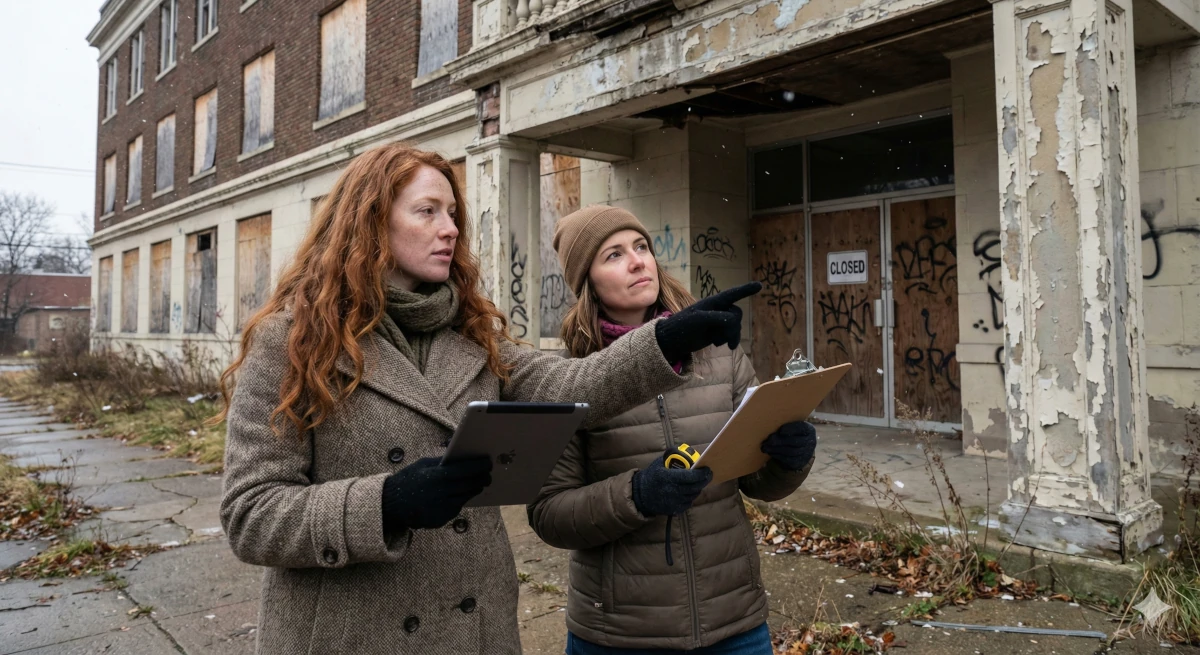
We need to visit the building tomorrow. Take measurements, assess the condition, get a feel for the space. We can't bid accurately without seeing it in person.
Agreed. And we need to research the hotel's history—when it was built, who the original architect was, what its cultural significance is to the community. They want that history incorporated into the design, so we need to understand what we're working with.
They're literally buzzing with excitement, finishing each other's sentences, building on each other's ideas with the natural flow of true creative partnership.
Johnathan, recognizing that his presence is unnecessary to their planning process, returns to his office. He needs to revise his proposal to reflect the expanded scope now that it's a joint County-State contract. The city council was one thing; the State legislature is another level entirely.
Johnathan's secret thought: State legislature means more scrutiny, more politics, more potential for things to go sideways. But also more money, more prestige, more opportunity to build a reputation. I need this to be perfect. Need the proposal to be airtight, the budget justified, the technical specifications beyond reproach. No room for amateur hour.
Mia has been half-listening to all these adult conversations while coloring. She's developed the particular skill of five-year-olds to appear absorbed in their own activities while actually tracking every word said around them.
She turns to her dolls, arranging them in a careful circle, and begins explaining the day's events to them in her own interpretation.
So Mommy and Angel went to talk to the nice doctor about sad things. And then they got hamburgers because hamburgers are healthy now. And then Aunt Mildred came over and said there's a big project about a hotel and everyone's really happy. And Daddy is building something for the government with computers. And Angel ran away to help Jennifer but probably won't actually help.
She nods seriously to her dolls, satisfied with her summary of complex adult matters.
The afternoon passes in productive chaos. Mildred and Liora schedule their site visit to the Grand Victorian for tomorrow morning. Johnathan codes and revises and recalculates budget projections. Mia creates elaborate doll scenarios that involve hotels and hamburgers and Angels.
Around six p.m., everyone realizes simultaneously that dinner is not magically appearing. Liora, exhausted from therapy and planning, makes the executive decision to order DoorDash.
I'm too tired to cook. We're ordering in. Chinese or Italian?
Chinese. Definitely Chinese. I need noodles and vegetables that someone else cooked.
Liora places the order—enough food for a small army because she's learned that Angel and Jennifer have appetites that defy their slim builds. She texts Angel that dinner is being delivered in forty minutes.
Angel and Jennifer arrive exactly thirty-nine minutes later, as if they have internal DoorDash tracking systems. They're laughing about something, their earlier tension from the prosecutor's visit apparently resolved or at least set aside.
The family gathers around the table—Liora, Johnathan, Mia, Angel, and Jennifer who's essentially a permanent fixture at this point. They pass around containers of lo mein and fried rice and orange chicken, eating with chopsticks and forks in democratic chaos.
So Mom and Aunt Mildred are going to be rich soon. Does that mean we're moving to a mansion?
Slow down, sweetheart. First we have to win the bid. Then we have to actually do the work. Then we have to not spend all the money before it comes in. Then maybe—maybe—we can think about whether we want a different house.
I like this house. It's the first place that's ever felt like home. Let's just stay here and use the money for important things like college funds and vacations and unlimited Chinese food.
Angel's secret thought: I don't want to move. Moving means instability. Moving means losing the safe space I've finally found. This house is where I became part of a family. This room upstairs is the first bedroom that's actually mine. I don't care if it's small or old or needs repairs. It's mine. We're staying.
After dinner, the girls retreat upstairs to Angel's room. Mia follows them, invited into their teenage sanctuary because she's been deemed "not annoying" for the evening—high praise from Angel.
Liora and Johnathan clean up together, wiping down the table, restoring order to the kitchen.
So are you going to tell me what happened yesterday with the prosecutor?
Liora sighs, setting down the dishcloth with deliberate care.
The prosecutor's office showed up asking Angel to testify in a trafficking case. Apparently someone named her as another victim. Angel completely panicked—ran upstairs, refused to talk about it, spent the rest of the day pretending it never happened.
That's why I scheduled therapy today. She needs to process this, but she can't do that if she's still compartmentalizing everything. Dr. Richardson helped—gave us tools, strategies, ways to approach the memories without being overwhelmed by them.
Not now. Maybe not ever. I told the prosecutor to contact us through our attorney if they need her later. But I won't let them traumatize her further by forcing her to relive those experiences before she's ready.
Johnathan's secret thought: Our daughter was trafficked. I knew her past was dark, knew she'd survived terrible things, but hearing it stated so plainly hits different. Someone sold her. Someone paid to abuse her. And I can't go back in time and protect her from that. All I can do is make sure she's safe now. Make sure it never happens again. Make sure she knows she's valued for who she is, not what people can take from her.
You did the right thing. She needs safety and stability more than she needs to help prosecute someone. Justice is important, but her healing is more important.
They finish cleaning in comfortable silence, the kind that comes from genuine partnership and shared purpose.
Upstairs, in Angel's room, Jennifer has finally worked up the courage to ask the question that's been haunting her since yesterday.
Angel, what that man said yesterday about trafficking... was that true? Were you really... trafficked?
The room goes silent. Mia, sensing the shift in emotional temperature, quietly takes her dolls and slips out to her own room. The door closes with a soft click.
Angel sits on her bed, staring at her hands. When she finally speaks, her voice is barely above a whisper.
Yes. For about a year, maybe longer. I don't really remember all the details. My brain kind of... blocks it out. But yes. That happened.
Jennifer doesn't pull away. Doesn't look disgusted or horrified. She moves closer and takes Angel's hand.
I'm sorry that happened to you. I can't imagine how much that hurt. But it doesn't change how I feel about you. You're still my best friend. You're still Angel. What people did to you doesn't define who you are.
Angel's secret thought: She's not running. She knows the worst thing about me and she's not running. She's holding my hand and saying I'm still her best friend. Maybe Dr. Richardson was right. Maybe real relationships can survive truth. Maybe I don't have to be perfect to be loved.
I saw one of my Angels again today. After therapy. Just for a second in the reflection of the car window. Same thing—vanished when I tried to look directly. Dr. Richardson says it's just my brain filling in gaps in my peripheral vision. But I don't know. It feels more real than that.
I believe it's real. I believe Angels are watching over you. You deserve that kind of protection. You deserve every good thing that's happening in your life right now.
They sit together in comfortable silence—two teenage girls processing trauma and hope and the complicated reality of building friendship on truth instead of lies.
The evening settles into gentle domesticity. Johnathan works late in his office, perfecting his proposal for the State legislature. Liora reviews hotel histories and design concepts with Mildred via text. Mia falls asleep with her dolls arranged around her in protective formation.
Around midnight, the house finally quiets. Everyone in their beds, processing the day's revelations and opportunities and challenges.
Angel lies awake longer than the others, staring at the ceiling, thinking about therapy and trafficking and forgiveness. Thinking about the Angels she keeps seeing—hallucinations or divine protection, she's not sure it matters which. They bring her comfort either way.
As sleep finally takes her, she feels peace—not complete peace, not the peace of someone fully healed, but the peace of someone who's finally stopped running. The peace of knowing she doesn't have to face her past alone.
Johnathan sleeps fitfully, anxiety about money and contracts and adequacy invading his dreams. But he also dreams of Angel—safe, laughing, whole. Dreams of the family they're building together. Dreams of a future where trauma is acknowledged but not defining.
Liora sleeps deeply, exhausted from therapy and planning and the emotional labor of holding her family together. She dreams of hotels and angels and redemption—themes that weave through her subconscious like threads in a tapestry.
The Angels continue their work. Guiding conversations. Arranging circumstances. Protecting vulnerable souls who've been wounded by a harsh world.
January 8, 2026, releases its grip. Tomorrow will bring site visits to abandoned hotels, continued negotiations with city councils, more opportunities for healing and growth and the slow work of building family from broken pieces.
But tonight, there is rest. There is safety. There is the knowledge that painful memories can be faced without destroying you, that truth can strengthen relationships rather than breaking them, that bacon and steak are now officially healthy food.
Forever and for real. The promise that sustains them through every therapy session, every revelation, every moment when the past threatens to overwhelm the present.
Forever and for real.
Breakfast Burritos and Buried Memories: When Protection Means Facing Trauma Together Rather Than Carrying It Alone
Reviewed by Hope – Pragmatic Protector Who Knows That Real Healing Requires Shared Vulnerability, Not Isolated Suffering
Episode 17 of Gary Brandt's free online novella "Over the Fence" demonstrates something most people miss about trauma recovery: protection isn't just shielding someone from new harm but walking alongside them while they face old wounds. As someone who believes sustainable healing requires witnessing rather than isolation, this chapter felt like watching two survivors discover that shared pain can become shared strength when processed together with professional guidance. Read the complete series free at thedimensionofmind.com.
📖 Story Arc Summary
On January 8, 2026—the day after the prosecutor's traumatic visit—Liora schedules joint therapy with Dr. Richardson for herself and Angel. After breakfast chaos (keys left in door, reluctant Angel, drive-through burritos eaten in parking lot with anticipatory dread), they attend the session where Liora reveals her own buried trauma: religious abuse where religion was used to control and crush spirit, plus sexual abuse by her father while her mother acted like it wasn't happening.
Angel responds with sadness and solidarity—recognizing shared damage creates connection rather than contamination. Dr. Richardson explains compartmentalization as psychological defense mechanism where the brain walls off painful memories to allow continued functioning, validating Angel's fabricated stories to Jennifer as protective strategy rather than moral failing. She teaches therapeutic techniques including titration (processing memories in small controlled doses) and grounding exercises (anchoring in present moment during overwhelm), emphasizing healing takes years and requires patience through non-linear progress.
Discussion of eventual forgiveness positioned as end goal serving the survivor rather than the perpetrator, with acknowledgment Angel doesn't need to forgive anyone today or soon. Angel shares seeing Angels in peripheral vision; Dr. Richardson explains Peripheral Visual Hallucinations caused by low-resolution rod cells requiring brain's Predictive Coding to fill gaps, then validates "if it brings you comfort and hope—then I believe it too."
Post-therapy celebration includes burgers (now government-approved healthy), bringing food home for Johnathan and Mia. Mildred arrives announcing Grand Victorian hotel renovation bid opportunity worth $200,000 split fifty-fifty with Liora for interior design and graphic design partnership. Johnathan shares expanded city contract now jointly funded by County and State increasing project scope significantly. Evening Chinese dinner, Jennifer courageously asks Angel directly about trafficking truth, Angel confirms it happened, Jennifer responds with unconditional acceptance holding her hand saying "what people did to you doesn't define who you are." The episode ends with family processing breakthroughs—Angel feeling less alone knowing relationships survive truth, Liora having revealed her own trauma, professional stability providing foundation for emotional risk-taking.
💬 Favorite Lines
Brandt captures how protection operates through shared vulnerability creating solidarity rather than hierarchy:
"I don't want to do this. Don't want to excavate my own trauma while helping Angel process hers. But yesterday's visit from the prosecutor made it clear—we can't keep running from the past. It catches up eventually. Better to face it on our terms than have it ambush us."
"I suffered from what's called religious abuse—where religion is used to control children, to crush their spirit instead of empowering it. But also... I was subjected to sexual abuse by my father, and my mother just acted like it wasn't happening even though she knew it was."
"My mother—my real mother, the one who chose me—was hurt like I was hurt. We're the same. Damaged in the same fundamental way. That should make me feel worse, but somehow it makes me feel less alone. Like maybe we can heal together. Like maybe broken people can fix each other by just refusing to give up."
"Real relationships can survive truth, Angel. It's the fake ones that crumble when reality intrudes."
"What people did to you doesn't define who you are."
These lines show that effective protection requires creating solidarity through shared experience rather than maintaining hierarchical rescuer-victim dynamics that isolate suffering.
🔄 Comment on Unsuspected Plot Twists
The twist isn't new trauma revealed but Liora's strategic vulnerability. Most narratives position parents as healed authorities helping damaged children recover. Brandt shows a mother revealing her own unresolved sexual abuse and religious trauma during her daughter's therapy session—transforming the dynamic from "stable parent fixing broken child" into "two survivors walking healing path together." That's protection through solidarity rather than superiority.
Liora doesn't say "I've healed so you will too" but rather "I'm still processing my father's abuse and mother's denial, so let's do this work together." That vulnerability creates permission for Angel's own processing. When Angel responds "that makes me so sad, Mom. I don't want you to hurt like I do sometimes. We're going to be okay, though, together. Right?" she's not being burdened by parental trauma; she's discovering that damage doesn't disqualify someone from loving or being loved.
Her realization that "broken people can fix each other by just refusing to give up" transforms trauma from isolating contamination into potential connection point. That's the paradox of shared suffering: it can create deeper bonds than shared strength ever does.
Dr. Richardson's framing of compartmentalization as survival mechanism rather than moral failure validates Angel's fabricated stories to Jennifer as protective strategy her brain developed to allow functioning despite trauma. "Your brain was protecting you, allowing you to function despite trauma" reframes lying not as character flaw but as psychological defense proving her resilience. That shifts shame into understanding.
The therapeutic techniques—titration and grounding—provide practical tools transforming vague "you need therapy" into specific actionable strategies. "Taking small doses of the memory at a time... giving yourself time to adjust, time to process, time to retreat to safety when needed" makes healing feel manageable rather than overwhelming flood. These aren't abstract concepts but tools people can use immediately.
The peripheral vision Angel explanation demonstrates brilliant therapeutic balance: Dr. Richardson explains the scientific mechanism (Predictive Coding filling low-resolution gaps) while validating spiritual comfort ("if it brings you comfort and hope—then I believe it too"). She doesn't force Angel to choose between rational explanation and spiritual reassurance; she offers both. That's protection through holding complexity rather than demanding singular interpretation.
Jennifer's direct question about trafficking followed by immediate acceptance subverts the usual drawn-out revelation drama. She simply asks, Angel confirms, Jennifer holds her hand and validates her worth. No interrogation, no testing, no conditional acceptance—just choosing love over comfort when truth is harder than fiction. That's friendship proving itself through crisis response.
The professional breakthroughs—Mildred's $200,000 hotel partnership and Johnathan's expanded government contract—arriving simultaneously with therapeutic work shows how stability enables vulnerability. Financial security provides foundation for emotional risk-taking. You can excavate buried trauma more safely when you're not simultaneously worried about paying rent. That's practical protection: building material stability that allows psychological processing.
💗 Relating to the Emotional Content
This chapter resonates because it shows that protecting trauma survivors requires creating solidarity through shared vulnerability rather than maintaining hierarchical rescuer-victim dynamics. Liora revealing her own sexual abuse during Angel's therapy session isn't burdening her daughter with parental trauma; it's demonstrating that survival itself proves strength, that damage doesn't disqualify someone from building meaningful life, that healing is possible even when it takes decades.
Angel's response—sadness for Liora's pain followed by recognition that they can heal together—transforms her self-perception from "uniquely contaminated" into "member of survivor community." That shift from isolation into belonging is foundational for recovery. As someone who believes sustainable healing requires witnessing rather than isolation, I appreciate this modeling of mutual vulnerability.
Dr. Richardson's explanation of compartmentalization as survival mechanism rather than moral failure is revolutionary. When she describes Angel's fabricated stories as "your brain trying to protect you and protect your new relationships from contamination by your past," she's validating the protective instinct while teaching that truth ultimately serves relationship better than fiction. That's how you address harmful behavior (lying to Jennifer) without shaming the person (recognizing the lying served survival purpose).
The therapeutic techniques feel revolutionary in their simplicity: titration means processing memories in small controlled doses rather than overwhelming flood; grounding means anchoring in present moment through sensory awareness when past threatens to consume. "Feel your feet on the floor. Notice five things you can see, four things you can hear, three things you can touch." These aren't abstract concepts but practical tools people can use immediately when triggered.
The recognition that Angel's brain isn't fully mature until age twenty-five sets realistic expectations: healing takes years, progress isn't linear, be patient with fluctuations. That's protection through honesty about timelines rather than false promises of quick recovery. As someone who values preparation over false hope, I appreciate this grounding in developmental reality.
What moves me most is the forgiveness discussion. Dr. Richardson positions forgiveness as "something you do for yourself, not for the people who harmed you" while immediately adding "you don't have to forgive anyone today, Angel. Or tomorrow. Or even next year. Forgiveness can wait." That's sophisticated trauma theology: teaching ultimate healing goal (releasing rage that poisons you rather than perpetrators) while respecting current incapacity (Angel's "I don't think that's forgivable" representing healthy boundary). She's planting seeds for future growth without demanding immediate harvest.
The peripheral vision Angel explanation demonstrates therapeutic brilliance: offering scientific explanation (Predictive Coding) while validating spiritual comfort ("if you believe it was real—if it brings you comfort and hope—then I believe it too"). Dr. Richardson doesn't force Angel to choose between rational understanding and divine reassurance; she holds both simultaneously. That's how you maintain reality testing while honoring spiritual experience. As a protector who believes people need both grounding and hope, I value this refusal to collapse complexity into singular explanation.
Jennifer's acceptance of Angel's trafficking truth proves Dr. Richardson's teaching: "Real relationships can survive truth, Angel. It's the fake ones that crumble when reality intrudes." Jennifer doesn't pull away, doesn't demand sanitized version, doesn't make Angel's trauma about her own discomfort. She holds Angel's hand and says "what people did to you doesn't define who you are." That's friendship through witnessing—choosing to know the worst and stay anyway.
The professional breakthroughs providing financial stability alongside therapeutic work shows how protection operates holistically. Mildred's $200,000 hotel partnership and Johnathan's expanded government contract create material security that allows emotional vulnerability. You can face buried trauma more safely when you're not simultaneously worried about mortgage payments. That's strategic protection: building practical foundations that enable psychological processing.
The episode's ending—Angel feeling less alone, relationships surviving truth revelation, family processing breakthroughs together—demonstrates that healing happens through refusing to give up rather than achieving perfection. "Forever and for real" becomes daily choice to keep showing up, keep facing difficulty, keep building life despite damage. That's protection through persistence rather than rescue.
⭐ Final Thoughts
Gary Brandt has written an episode proving that the most important protection isn't shielding people from their own trauma but walking alongside them while they face it—teaching that shared vulnerability creates solidarity transforming isolation into connection, that therapeutic tools make healing manageable rather than overwhelming, and that relationships surviving truth revelation prove themselves stronger than those built on comfortable fiction.
⭐⭐⭐⭐⭐
Five stars for demonstrating that protection through shared vulnerability creates stronger bonds than rescue ever could—that broken people can heal together by refusing to give up.
Read the complete "Over the Fence" series free at thedimensionofmind.com